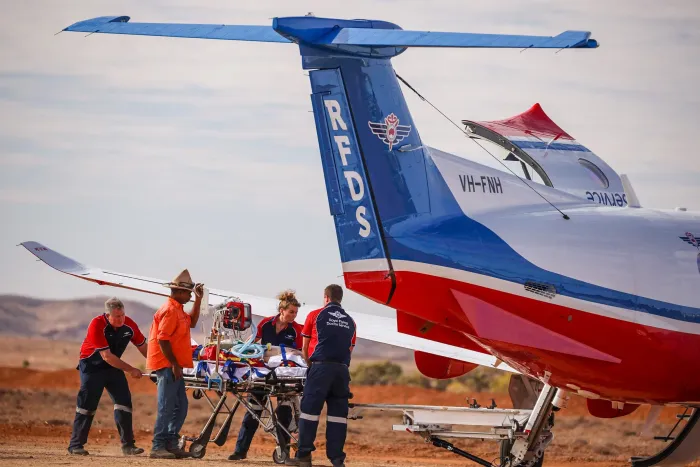
From a cranky scrub bull, horse accidents and snake bites to heart attacks, premature labour and emergency flights in the middle of the night, the Royal Flying Doctor Service has been there for generations of Australians when help was a very long way away.
We recently asked RFTTE members a simple question:
The response was extraordinary. Members shared stories of lives saved, families reunited and critically injured patients retrieved from some of the most isolated parts of Australia.
For people living and working in the bush, the Royal Flying Doctor Service is far more than an aircraft in the sky. It is reassurance that when the worst happens, skilled medical help can still reach you.
More than an emergency aircraft
The Royal Flying Doctor Service connects Australians living in rural and remote areas with primary healthcare, emergency retrievals, hospital transfers, dental care and mental health services.
According to the RFDS, someone needs its services every two minutes. While the organisation receives government support, it remains a not-for-profit service that relies on donations to help bridge the funding gap.
The following stories, shared by RFTTE members, show exactly what that service means on the ground.
Bulls, horses and station accidents
Working with livestock, aircraft and machinery carries risks wherever you are. When the nearest major hospital is hundreds of kilometres away, those risks take on another dimension.
“Four times they’ve come for me. Broken rib cage, broken neck and spinal injuries, bee attack and bull stomping. All separate incidents.”
Tristan Taylor
“They flew my son to Townsville Hospital after being stomped on by a bull. Forever grateful. After five and a half hours of surgery and a replacement artery in his arm, a week in hospital and he’s all good now.”
Bianca Roberts
“A mate of mine needed them at Burketown after a truck diff fell on him. They got him to the Isa in no time. Top people.”
John McClafferty
“Had a horse roll on me on a place north of the Curry and they picked me up and flew me to the Isa.”
Mick Dunlop
“I fractured my spine in three places in a horse accident and was airlifted from Alpha to Rockhampton. Great crew. They looked after me and my young daughter. I’ll always support the RFDS.”
Teena Graham
“An old fella was knocked down by a bullock at the 12 Mile Yards in basalt rock country and hit his head. They put a mattress in the back of the Toyota and drove him to Wondovale Station, where there was an airstrip.
“The Flying Doctor saved him. The old fella gave up ringing after that. Thank the Flying Doctor. They are a mainstay for bush people.”
Helen White
“Flown from Barkly Downs Station to Mount Isa after a motorbike accident.”
Emma Frewen
“Flew me from St George to Brisbane after being run over by a ride-on lawn mower at age three.”
Will Bashford
Frazer Wittig managed to sum up the cause of many bush injuries in just two words:
“Bloody horses.”
Frazer Wittig
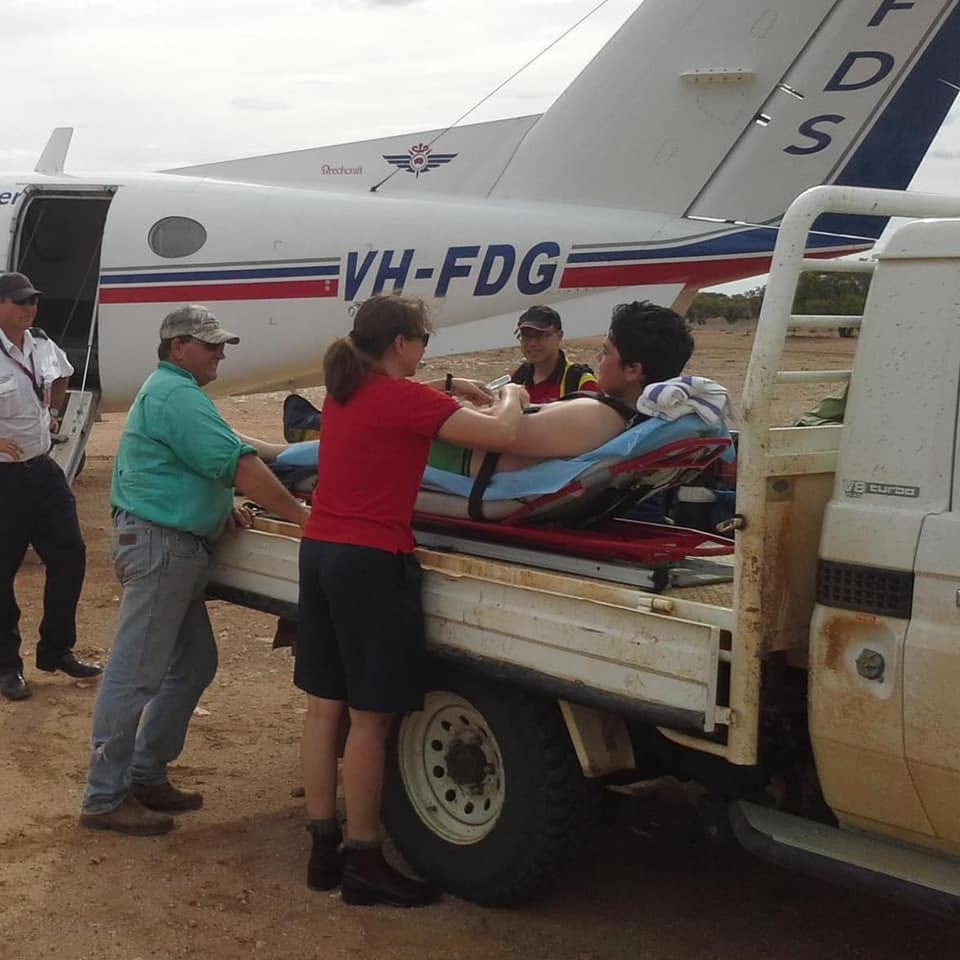
Helicopter pilot survives a 12-metre fall
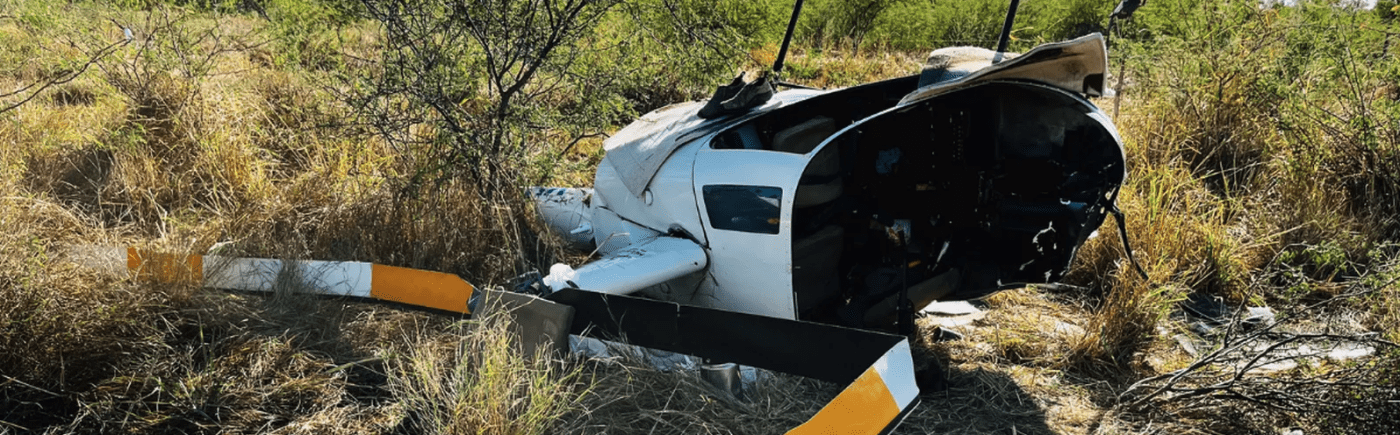
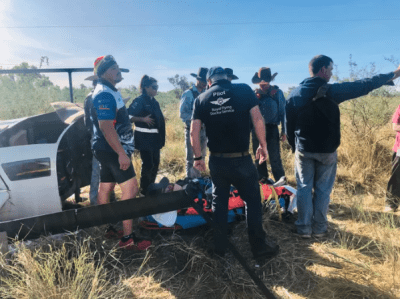
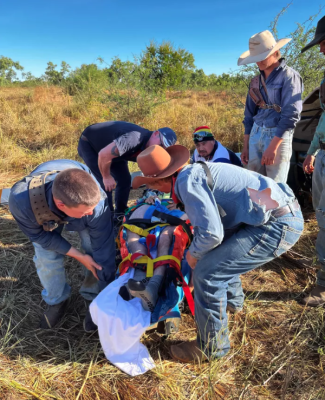
Helicopter pilot Frank Hoare is lucky to be alive after striking a power line while mustering cattle at a remote station near Normanton in the Gulf of Carpentaria and plummeting 12 metres to the ground.
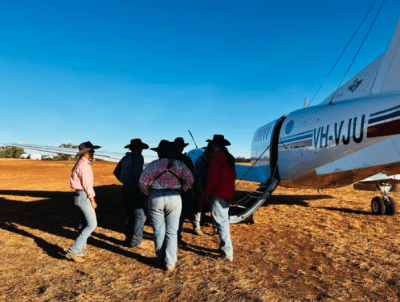
With the power lines down and no mobile reception, a witness raced back to the station on a motorbike to contact the Flying Doctor. Within an hour, the RFDS Mount Isa aeromedical team had landed at the nearest airstrip, loaded its equipment into a ute and driven to the crash site at Neumayer Valley.
The team stabilised Frank at the scene, using a portable ultrasound to locate the correct position for a nerve-blocking injection and a pelvic binder to help prevent internal bleeding. He was then flown to Townsville for emergency surgery on his broken femur.
“Having medical professionals able to turn up to a crash scene in the middle of nowhere is vital.
“If we won the lottery, we would donate millions of dollars to the RFDS if we could.”
Sarah Hoare, Frank’s wife
After nine weeks of recovery, Frank remarkably returned to work and is now mustering cattle from the air again.
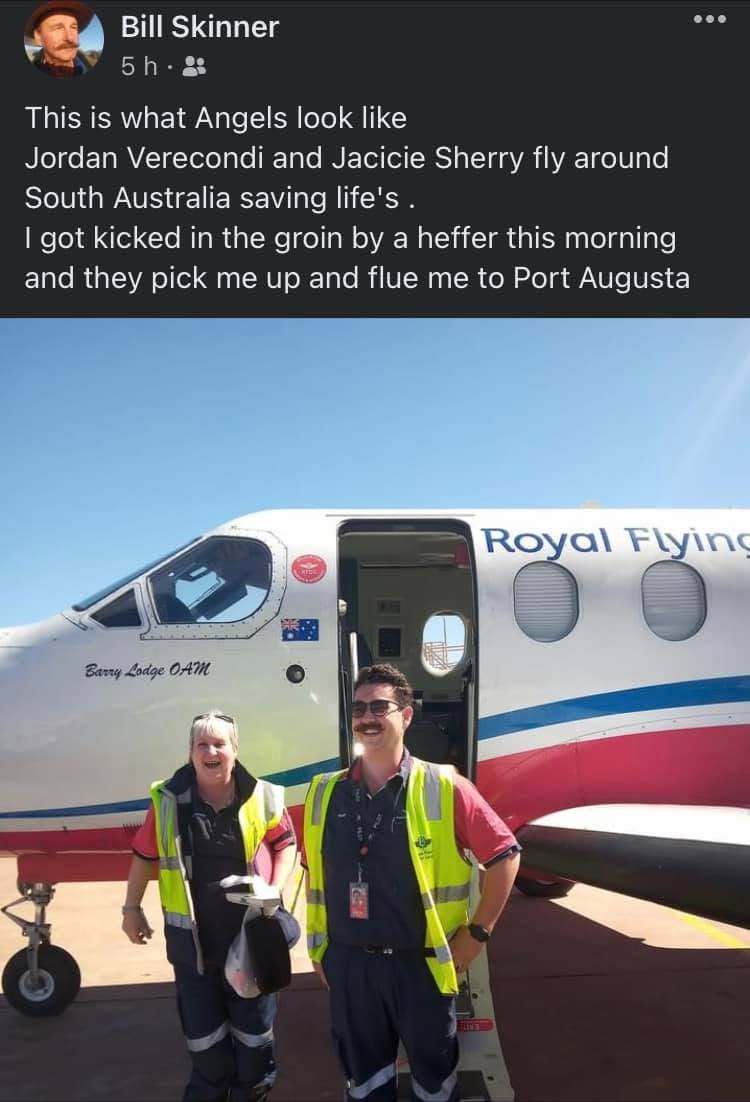
Bill Skinner’s “slight mishap”
The RFDS in action. A good mate of mine, Bill Skinner, was kicked in the dick by a heifer while branding in the crush with the top gate open, 250 kilometres from Birdsville. He bled like a bastard and was flown by the Royal Flying Doctor Service to Port Augusta.
Despite the “slight mishap”, Bill said he received the finest care from the friendly RFDS crew, who were “extremely helpful and good at their job”. He is now recovering with numerous staples and bruises the size of dinner plates.
Bill also told me this was exactly how he wanted the story worded! 😂
Sam Hughes, The Travelling Jackaroo
A terrifying accident in the wet season
For Jamie Smith and his family, the RFDS arrived after his 20-month-old son was kicked in the face by a horse.
“When my son got kicked in the face by a horse late one afternoon in the middle of the wet season, they wasted no time arriving. They got there and were off the ground before dark. An hour and a half later we were in Cairns Base Hospital.
“They are amazing, not to mention all the accidents that happen up here during tourist season.”
Jamie Smith
Seven rolls of poly pipe
Lilee Holland was working near Oodnadatta when hundreds of kilograms of poly pipe came crashing down.
“I had about seven rolls of poly pipe fall on top of me, each weighing about 50 to 70 kilograms. I came out with a fractured spine, concussion and a sprained ankle.
“They flew me from Oodnadatta to Port Augusta. Bloody legends.”
Lilee Holland
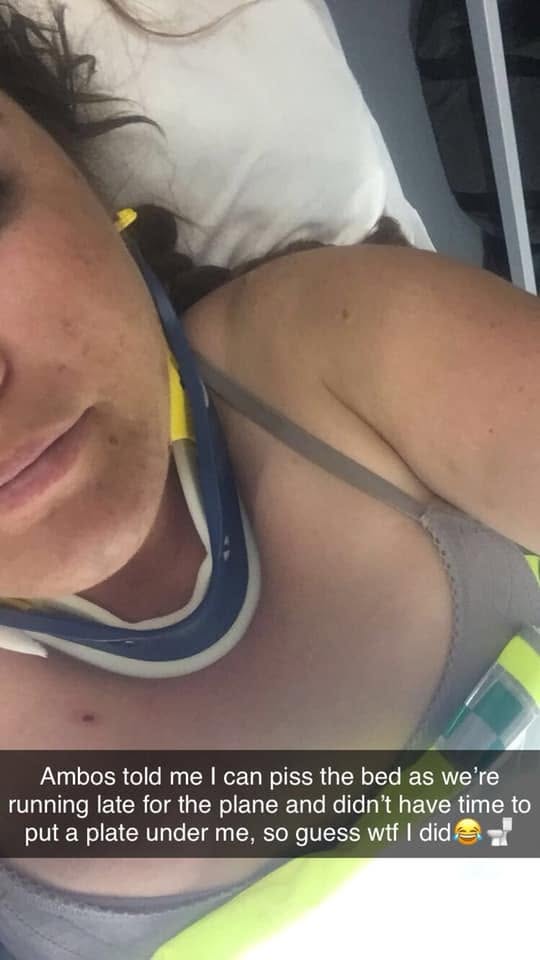
A broken ankle and a memorable first flight
Steve Wilkinson’s RFDS journey began with something as simple as slipping on wet grass while wearing thongs.
“I slipped on wet grass and broke my ankle while wearing thongs in June 2020. I spent a fortnight in hospital and ended up with three plates and 17 screws.
“It was my first time in a plane without a parachute. My heart rate did spike very high!” 🛩️
Steve Wilkinson
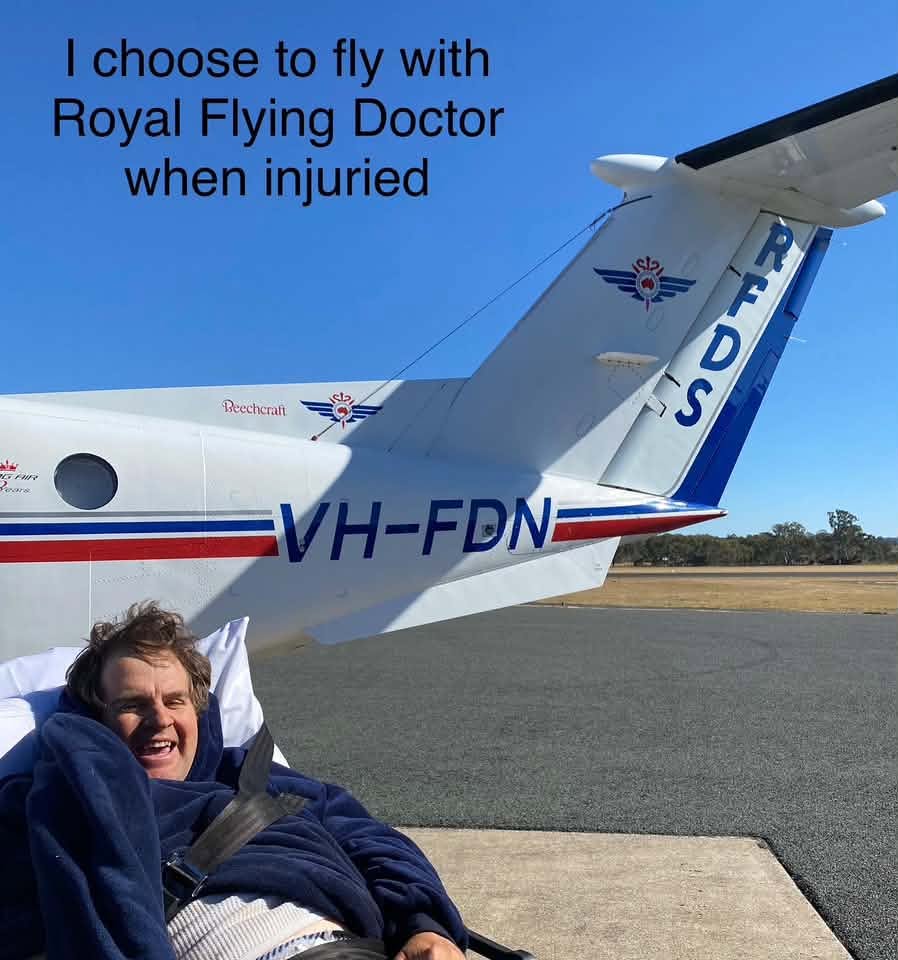
Motorbike accidents far from help
Several members recalled serious motorbike and quad bike accidents on remote properties and roads.
“I hit an anthill on a bike in 1994 and it drove my femur through my back. The RFDS took me from Torrens Creek to Townsville in very quick time.
“We always had an RFDS medical chest and I have made annual donations since. Thank you, RFDS.”
Jeff Bucknell
“I had a pretty bad wreck off a bike in 2003 at Dunbar. The RFDS plane had been cleared for take-off and was heading to Brisbane for a service, I think.
“They took off, changed their course for Dunbar and flew me straight to Cairns. Pretty safe to say they saved my life.”
Ben Jensen
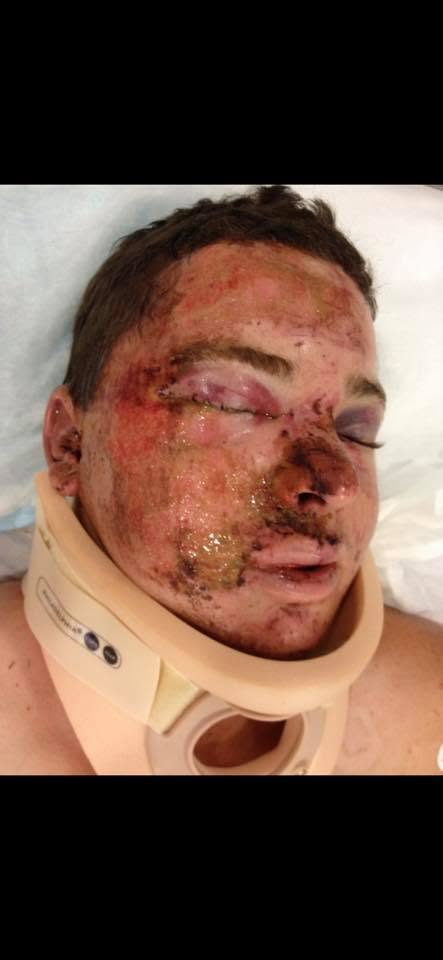
“The air ambulance saved my life, landing in the paddock at home. I hit a stone cattle grid at a fast pace without a helmet on a two-wheel motorbike.
“I came out with a brain injury and a prettier-looking face thanks to the intensive surgeries. Thanks to all the people in this line of work. I have a heart full of gratitude for you.”
Willy Cole
“My second broken neck was from coming off a quad bike near Nyngan in 2012. The first was after coming off a pony near Normanton in 2008.”
Aaron O’Leary
“Our son James was 12 when he came off a motorbike in a swamp area on Stirling Station, snapping his femur and crushing his ankle.
“Once the remote ambulance located us, he was taken to the Ti Tree clinic and stabilised. There he met the wonderful Nurse Wendy and Dr Dan from the RFDS before being transported to Alice Springs.
“James spent seven days in Alice Springs Hospital before the RFDS transported him to the Women’s and Children’s Hospital in Adelaide for surgery.
“You never know when you are going to find yourself in that situation. We are truly grateful to the RFDS.” ✈️✨💙
Anita McCarthy, speaking about her son James
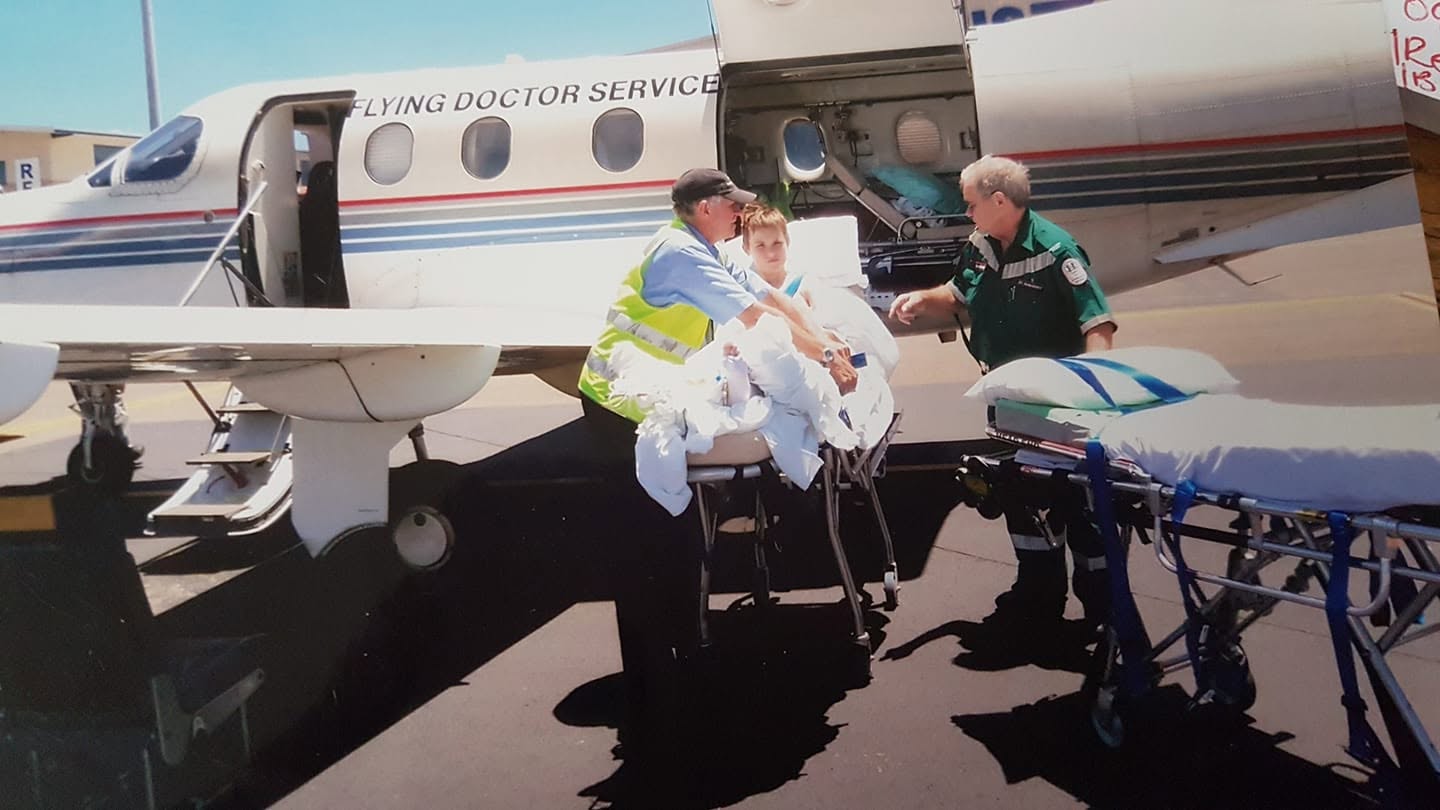
Heart attacks hundreds of kilometres from hospital
For people experiencing a heart attack in remote Australia, every minute matters.
“They flew me from Springsure to Sunshine Coast University Hospital after a heart attack last Monday. Thanks Matt and Peta.”
Joe Okeeffe
“They flew my dad to Brisbane from Rockhampton when he had a severe heart attack.”
Jessica Geiszler
“Broken Hill to Adelaide with nine broken ribs and a few other problems. I didn’t think I’d be coming home.”
Rick Hannaford
A major heart attack in the Kimberley
Narda Grover’s journey from a station near Fitzroy Crossing to Royal Perth Hospital involved a flat aircraft tyre, a replacement RFDS plane and a mid-journey crew change.
“I had a heart attack while waiting in an ambulance for the RFDS to arrive and fly me to Perth. When the plane landed, it got a flat tyre, so they had to fly another RFDS plane to pick me up.
“Once we were in the air and three-quarters of the way to Perth, the crew ran out of hours, so we swapped crews at Meekatharra.
“I started having my heart attack at 2 am on the station. At 6 am I thought it was a good time to head into town. I got to Fitzroy Crossing just after 7 am and arrived in Perth at 8.30 pm. I arrived at Royal Perth Hospital with a police escort. It was classed as a major heart attack.
“All I can say is that the RFDS did an amazing job. The flat tyre was no one’s fault. I was looked after and never once feared I wasn’t going to make it. They are the angels in the sky.”
Narda Grover
Early labour at Glendambo
Amy Simmons went into labour at less than 27 weeks while at Glendambo in South Australia.
“The RFDS picked me up on a horrible night from Glendambo. I had gone into early labour at 26, nearly 27 weeks.
“They got me to Adelaide and I had my now 11-year-old daughter a week later.”
Amy Simmons
“I was flown to Perth from a station with a broken ankle on my 21st birthday.
“The next trip was Geraldton to Perth for an emergency caesarean at 36 weeks. The baby was six weeks early and is now 19.
“It is one of the most important services for remote and country medical emergencies.”
Alana Clohessy
Two months premature and hundreds of kilometres from Perth
Lauren Surmon went into labour two months early with her first child while living in Carnarvon.
“I went into labour two months early with our first child. I asked for my partner to be on the plane, but there wasn’t enough fuel for four people to be aboard.
“I was flown from Carnarvon to Perth and my partner missed the birth of our child. I then had to stay in Perth for almost two months.
“But our boy is perfectly fine and healthy.”
Lauren Surmon
“My wife was flown out for the birth of our first son after going into labour five and a half weeks early. She was flown to Perth again after complications with our son.
“I’ve also been flown out with a necrotic appendix and, this year, with a possible heart attack or stroke. Lots of people I know have needed the RFDS here in the Kimberley.”
Raymond McCumstie
Flown to Port Augusta at just one day old
“Our little one was flown to Port Augusta at just a day old.”
Jenna Louise
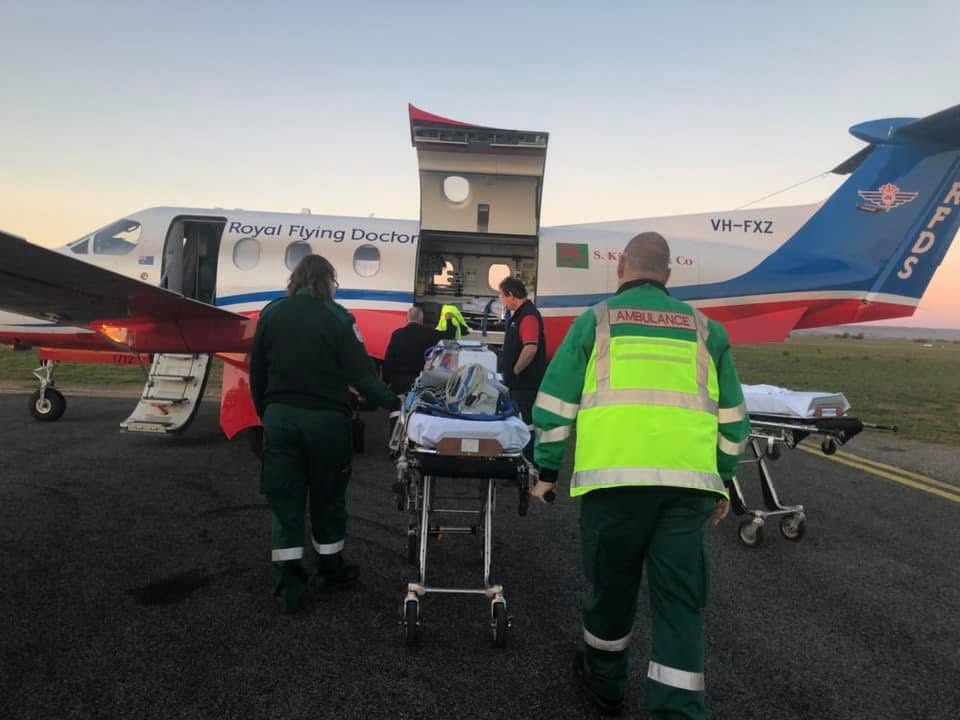
Giving a little boy his fingers back
When Emily-jo Thomas’s one-year-old son suffered a terrible injury at home, the RFDS gave surgeons the time they needed to save his fingers.
“My son, who was one at the time, severed his fingers after the back door in our new house slammed shut on him.
“The RFDS flew him from Esperance to Perth and the amazing doctors in Perth had enough time to reattach his fingers.”
Emily-jo Thomas
A night-time landing on Christmas
RFDS crews operate in difficult conditions at all hours of the day and night.
“We needed the RFDS one Christmas night for a very sick child. The night-time landing in the bush was amazing.”
Patrick Michael O’Brien
“I’ve assisted in many medevacs at night. Bloody amazing crews.”
Mick Boyce
“Breaks, splits, rollovers, concussions, stitches and serious accidents requiring helicopter transport to intensive care and months of rehabilitation, along with phone support and the medical chest.
“They are real lifesavers for people in the bush.”
Louise Stonehouse
When flooded roads leave no other way out
When roads are cut in both directions, an RFDS aircraft can become the only practical way to reach hospital.
“I was flown by the RFDS from Camooweal to Mount Isa Hospital with a suspected deep vein thrombosis. The roads were flooded in both directions.”
Marie Jones
A brain tumour diagnosis
When Chelle Fenton’s husband was diagnosed with a brain tumour at Rockhampton Hospital, the RFDS transferred him to Brisbane for emergency surgery.
“My husband was diagnosed at Rocky Base Hospital with a brain tumour and flown to Brisbane for an emergency operation. We lived in Emerald, Queensland. The RFDS are our angels in outback Queensland.”
Chelle Fenton
“Last March they flew me from Bundaberg to Brisbane for surgery on a rare spinal cord tumour.”
Brooke Dingle
A childhood accident at a remote mine site
Melannie Apps was only 10 years old when she suffered a devastating injury to her right leg at a mine site.
“I had an accident at a mine site when I was 10 years old and very badly damaged my right leg. It was basically stripped like a chicken leg from just below my knee to my ankle.
“I had to be driven to the medical centre, which had very few saline packs left because there had been another accident earlier that day.
“I eventually reached Princess Margaret Hospital in Perth, where they managed to save my leg. No amputation, thank God.”
Melannie Apps
Two collapsed lungs in 10 days
“I burst a lung twice in 10 days. The RFDS flew me from Stanthorpe to Brisbane. Forever grateful.”
Mick Reid
When every minute counts
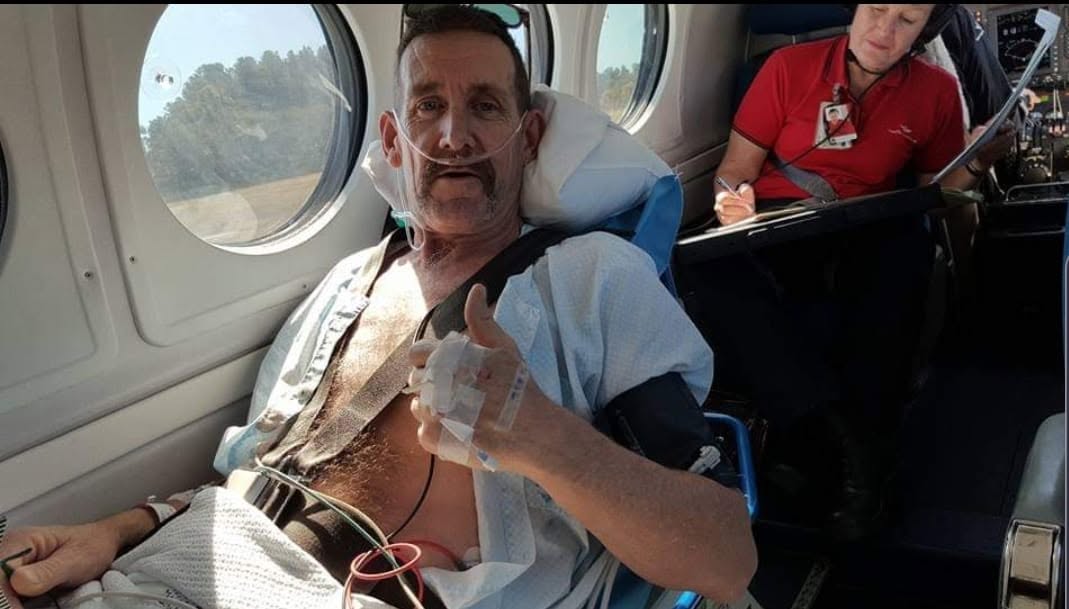
“They flew me to Cairns from Cooktown in the helicopter after I went downhill and left this world a few times.
“They kept me alive when others didn’t think it was possible. They also flew my mum to Cairns after a heart attack and have saved many of my friends.”
Don Woods
“They saved my son from bleeding out and flew him to Townsville General Hospital.”
Joy Duffy
Brown snake bite on a Northern Territory station
Will Ruth was working on a Northern Territory station when he was bitten by a brown snake about 30 years ago.
“I was bitten by a brown snake on a Northern Territory station 30 years ago. Luckily, the bloke I was cleaning troughs with knew exactly what to do.
“By the time the RFDS arrived, I was vomiting and had really bad abdominal pain.”
Will Ruth
Fingers caught in bore casing
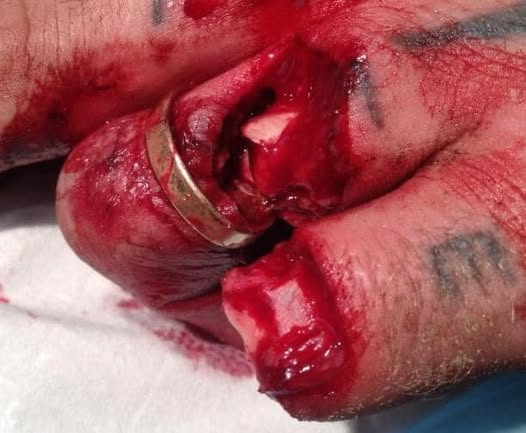
Rick Britton shared a remarkable story of quick thinking, photographs from the accident scene and a rapid transfer from Boulia to Mount Isa.
“I used my fingers as bumper stoppers between two lengths of bore casing. It was a one-hour drive to Boulia. Within 45 minutes, the Director of Nursing had it cleaned up and the RFDS got me to the Isa in 35 minutes.
“Twenty minutes later I was in surgery and they sewed my thumb and finger back together. It was all because I took photos while my daughter cleaned and packed it up on-site.
“The surgeon looked at the photos and said, ‘Yep, I can put that back together.’ I was home the next day. They say we live remotely and have poor health services, but that’s pretty good, I reckon.”
Rick Britton
A horse-shoeing accident
“Shoeing a horse and she put me in a coma for three weeks.”
Chris Perry
Flying low to save an eye
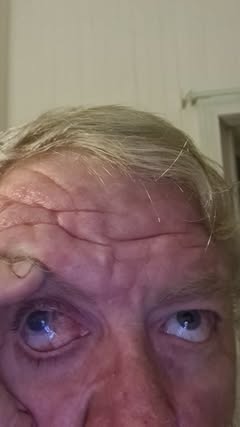
Steve O’Connell suffered a serious eye injury while working on Mornington Island in 1996.
“I didn’t have the right gear and was using a screwdriver to peel a rubber surround over a panel when I stabbed myself in the left eye.
“They had to fly as low as they could so as not to pressurise the plane and force fluid to leak from my eye. Twenty-four years later, I still have the eye, although it is now totally blind.”
Steve O’Connell
Bush humour aboard the Flying Doctor
Even during a frightening emergency transfer, bush humour has a habit of finding its way into the aircraft.
“They picked me up from Port Pirie, went to Port Lincoln to pick up someone else and then flew us to Adelaide.
“The most beautiful people in the world. The pilot even rolled me a smoke because my hand was a bit stuffed.”
Mark Bourbon
“They flew me from Bedourie to the Isa once. My first words to Mum at midnight were, ‘Now don’t panic, Mum, but I’m in the Isa hospital.’”
Christie Goodlet
“Growing up on a Kimberley cattle station, I had to be flown out a few times due to illness.
“Once, I didn’t want to go and still had plenty of fight in me, so I bit the doctor during take-off. The doctor was Rex Henderson.”
Doni Heseltine
Born aboard the Flying Doctor
Few RFDS connections begin quite as early as Georgia Russell’s.
“Born on the RFDS in 1998, meningitis and bitten by a death adder in 2018.”
Georgia Russell
Clinics, medical chests and doctors on the ground
The RFDS has never been only about emergency retrievals. For generations, it has provided remote communities with clinics, medical advice and access to healthcare that would otherwise be unavailable.
“My grandmother started the first clinic for the RFDS to bring medical services to Hungerford, Queensland.”
Margaret Sandford
“Eight years in the outback and these guys were the best. Dr Don from Mount Isa came to the rescue many times.
“The doctors, pilots and nurses were the most compassionate people I ever met, and we used to hold a lot of fundraisers too. Hats off to these beautiful people.
“I had one trip with them after losing my eyesight for three days.”
Janne Britta
“They flew in from Cairns after I dislocated my knee in 1979 at Strathpark. The plane was a Beechcraft.
“In those days, most Gulf properties donated at least one bullock a year to the RFDS. A great service.”
Neil Keller
The Flying Doctor who was also a vet
Andy Friedel shared a classic story from Wilcannia in the 1970s.
“One of my dogs got crook. ‘No worries,’ said the boss. ‘The Flying Doctor is due tomorrow.’
“I said, ‘Yes?’ He replied, ‘He’s also a vet.’
“Come tomorrow, there were about 57 sick rabbits, dogs, guinea pigs and budgies, and maybe three sick humans waiting when the young German doctor landed.
“He had graduated as a vet before switching to medicine and took it all in his stride and with good humour.
“I spent years running trucks across the Paddock and all over Western Australia. I never had to call on them, but I knew they were there. Bless them.”
Andy Friedel
Not every Flying Doctor story ended well
While most members shared stories of gratitude and successful retrievals, one member recalled a heartbreaking experience from Davenport Downs in 1987.
“We were at Davenport Downs when our camp cook, Bill Kelly from Winton, began having a heart attack. He was taken to the main house and the RFDS in Mount Isa was contacted.
“The decision was made not to fly out because his condition was not considered serious enough. Bill died a few hours later.
“I can still feel the warmth of him through the body bag as we loaded him onto another plane. I have never forgiven what happened.
“I continued supporting the RFDS through polocrosse events and rodeos, but always declined to make direct donations. That is simply how I feel.”
Andrew John Farrant
Supporting the service before you need it
Not every member had personally needed the Flying Doctor, but many support it because they understand how important it is.
“Luckily, I’ve never needed them, but we took a signed, unframed Queensland Origin jersey to the Windorah International Yabbie Races four years ago and auctioned it on the night to help them out. We got $1,100.”
Craig Commens
“I’ve never had to call them, but my wife and I attend their ball and donate what we can.”
JR Mathes
The angels in the sky
Aircraft, medical equipment and remote airstrips are important, but the strongest theme running through these stories was gratitude for the people involved.
The pilots who land in the dark. The doctors and nurses who calmly treat critically injured patients. The ambulance officers, station staff, local hospital teams and community members who help prepare airstrips and get patients aboard.
“Couldn’t live in the outback without this great service and these beautiful people. Four trips for a family member and one for me. A long one for our son, hurt just past the middle of nowhere in the Northern Territory.”
Barb Young
“The RFDS have made many trips out here. A possible miscarriage, a child with a broken leg, another broken arm, a severe eye injury, crushed arm, rapid atrial fibrillation, blood infection and a child with a head injury, along with accidents in the community.
“Thank you, RFDS.”
Noela McConachy
“Many years ago, my children, nine-year-old twins and an eight-year-old, were in a car that overturned. They were rushed to Hughenden Hospital, where the RFDS performed emergency surgery on one of the nine-year-olds.
“An amazing service. The outback would be lost without them.”
Heather Little
A service the bush cannot do without
These are only some of the stories shared by RFTTE members. Behind every emergency flight is a patient, a family and often an entire community waiting and hoping.
The Royal Flying Doctor Service gives Australians the confidence to live, work, raise families and travel across places where the nearest specialist hospital may be hundreds or even thousands of kilometres away.
Many people hope they will never need to call the Flying Doctor. But as these stories show, knowing it is there can make all the difference.
Help keep the Flying Doctor flying
To learn more about the RFDS or support its work, visit the Royal Flying Doctor Service website.
These stories were shared publicly by RFTTE members in response to our Facebook post. Some comments have been lightly edited for spelling, punctuation and readability while retaining each member’s meaning and voice. The stories are personal recollections and have not been independently verified by RFTTE. The experiences and opinions expressed belong to the individual members quoted. The Frank Hoare account is based on a story published by the Royal Flying Doctor Service, while Bill Skinner’s story was shared by Sam Hughes, The Travelling Jackaroo. RFTTE is not affiliated with or officially representing the Royal Flying Doctor Service. Blog compiled by RFTTE Pty Ltd founder Simon Cheatham.
If you’d like to add your RFDS story to the blog, contact us.