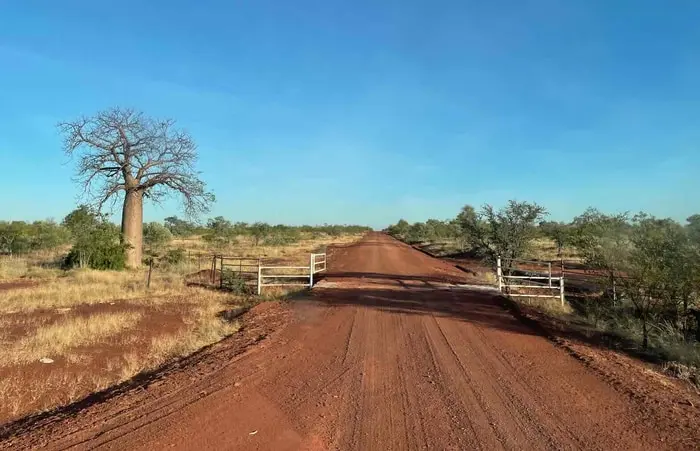
Spend enough time in the Australian bush, particularly on a cattle station, and you quickly learn that not every rule is written on a sign.
Some are handed down around the kitchen table, in the stock camp or over the UHF. Others are learned the hard way, usually after leaving a gate open, arriving at the homestead in a cloud of dust or heading somewhere without enough water.
Many properties will have their own set of rules written down, but some are unspoken...
Sam Hughes, aka The Travelling Jackaroo, asked the RFTTE.com community:
“What are some unspoken rules of the bush? I’ll start off with: always leave a gate how you found it.”
Well, that simple question certainly got the RFTTE community talking. There was plenty of practical advice, hard-earned bush wisdom and, of course, a few funnies at the end...
1. Always leave a gate how you found it
It is arguably the golden rule of the bush.
If a gate is open, leave it open. If it is shut, shut it behind you. Never assume a gate has been left that way accidentally.
I remember closing a gate once, thinking I was alone and that somebody had left it open, then hearing over the UHF radio, “Who told you to shut that bloody gate!? Open it... now!”
It was the chopper pilot downwind from me, bringing a mob through!
So remember, that gate may be controlling livestock, separating paddocks or allowing cattle access to water. Changing its position can create hours of unnecessary work and potentially place livestock, motorists and property owners at risk.
As Lana Martyn commented:
“Amazing how many people can’t shut a gate after they open it.”
The rule is simple: leave every gate exactly as you found it.
NOTE: It's the person in the front passenger seat who opens and shuts the gate!
2. Never enter a property without permission
A station, farm or rural property is someone’s home and workplace. Always contact the owner or manager before entering and report to the homestead when you arrive.
Douglas P Wombat summed it up well:
“Report to the big house before wandering around. Ask permission.”
Tex Benney agreed:
“Don’t enter without permission.”
Even if a track appears to be public or regularly used, never assume you have permission to travel through private property.
3. Respect livestock, working dogs and horses
Do not interfere with another person’s livestock, horses, dogs or equipment.
Suzanne Brown offered one of the clearest rules:
“Don’t mess around with other people’s livestock.”
Emily N Tristan George added:
“If it’s not yours, don’t touch it.”
Working dogs and horses are not simply pets. They are valuable working animals with established training and routines. Never feed, handle, release or distract them without asking their owner.
And as the old bush saying goes, never borrow another person’s horse, saddle or working gear without permission.
4. If you put stock somewhere, check the water
Water is life in the bush, particularly when livestock are involved.
Amanda Smith shared an important rule:
“If you put stock in there, you check the water source.”
Never assume a trough, tank, bore or dam is working simply because it was working yesterday. Pumps fail, pipes burst, trough valves stick and cattle can quickly empty or damage a water point.
Checking water is not a job to put off until later.
5. Never waste water
In the city, water can feel unlimited. In the bush, every drop may have travelled from a bore, dam, tank or rainwater catchment.
As Lynette Lyn put it:
“Don’t waste water.”
Turn taps off properly, report leaks and do not use more water than necessary. A dripping tap or overflowing trough can become a serious problem when the nearest replacement pump or plumbing supplies are hundreds of kilometres away.
6. Always carry more drinking water than you think you’ll need
Never head into remote country relying on the next service station, homestead or water point.
Des Bill advised carrying at least two litres of water per person because:
“The nearest servo is a bloody long way away.”
For longer trips, hot weather or remote work, considerably more may be required.
Paul Henwood added:
“Don’t ever go too far without water and a hat.”
Carry drinking water, wear appropriate clothing and let someone know where you are going and when you expect to return.
7. Tell someone where you’re going
Mobile reception cannot be relied upon across much of rural and remote Australia.
Carissa Dowling recommended:
“Always take lots of water everywhere you go and a UHF, and make sure someone knows where you are going.”
Before leaving, tell someone:
- Where you are heading
- Which route you plan to take
- Who is travelling with you
- When you expect to return
- What vehicle you are driving
A UHF radio, satellite communicator or personal locator beacon may be essential when travelling well beyond mobile coverage.
8. Slow down near the homestead
Nobody appreciates a vehicle roaring past the house and covering everything in dust.
Wake Cath offered a rule familiar to people on properties across Australia:
“Slow down. No dust near the homestead!”
Reduce your speed when approaching houses, yards, livestock, machinery and other vehicles. Dust can enter homes, contaminate water, reduce visibility and create unnecessary danger.
Slowing down is not only courteous. It protects people, animals and equipment.
9. The mob moves at the pace of its slowest beast
When working livestock, patience is often more effective than pressure.
Ben Jensen explained:
“The pace of the mob is the pace of the slowest beast.”
Pushing livestock too hard can cause animals to split from the mob, become stressed or suffer injury. Good stock handling means reading the cattle or sheep, giving them room and adjusting the pace to suit the conditions.
You cannot rush good stockmanship.
10. Do not camp beside a watering point
A dam, creek or trough might look like the perfect campsite, but your presence can prevent livestock and wildlife from drinking.
Tom Griffin advised:
“Don’t camp too close to a watering hole, dam or creek, as your being there will scare the livestock away and they won’t be able to have a drink.”
Camp a reasonable distance away and avoid blocking tracks used by livestock to access water.
11. Take your rubbish home
There is no rubbish collection service waiting at the end of a remote track.
Geoff Stolk’s rule was straightforward:
“Take your rubbish home with you.”
Tommy Walden went one step further:
“Take two bags of rubbish when you leave: one for your rubbish and another for the rubbish left behind by the grubs who were there before you.”
The broader principle was captured by Terry Ferguson:
“Leave nothing but footprints, take nothing but memories.”
Leave campsites, tracks and waterways cleaner than you found them.
12. Be extremely careful with fire
Fire can move frighteningly quickly through grass, scrub and timber, particularly during hot, dry and windy conditions.
Always check local fire restrictions before lighting any fire. Use existing fireplaces where possible, keep water nearby and never leave a fire unattended.
Before departing, extinguish it completely. If the ashes are still warm, the fire is not out.
A moment of carelessness can threaten livestock, wildlife, homes, livelihoods and entire communities.
13. If you break it, fix it
Things work hard in the bush and replacements are rarely just around the corner.
Helen Bates offered a short but important rule:
“You broke it, you fix it.”
If you damage a gate, fence, tool, vehicle or piece of equipment, own up to it immediately. Repair it properly if you can, or let the owner know.
Hiding damage only creates a bigger problem for the next person who needs to use it.
14. Put things back where you found them
Tools and equipment often have a particular home for a reason.
Lilith Tauraki advised:
“Put it back where you got it from.”
Leaving tools in a vehicle, paddock or shed can cost someone (usually your work colleague!) valuable time when they are urgently needed. Clean them, return them and report anything that needs repairing or replacing.
15. Thank the station cook
Never underestimate the person responsible for feeding a station crew.
Matthew Daly shared an important piece of dining-room etiquette:
“Always thank the station cook for cooking, even if it’s bad, and wash your own plate.”
Turn up on time, take your hat off at the table, clean up after yourself and show some appreciation. A good cook can make an enormous difference to morale on a remote property.
Complaining about a meal you did not have to plan, purchase, prepare or clean up is rarely well received.
16. If you fall off, get back on
Whether it involves a horse, a motorbike, a difficult job or a setback, resilience has always been part of bush life.
Kate Osman summed it up:
“Number one rule: if you fall off, get back on.”
Of course, check yourself and the animal for injuries first. But when it is safe to do so, learn from what happened and have another go.
And another piece of advice when arriving on a cattle station as a fresh station hand: if asked whether you can ride a horse, generally the best answer is, “I’ve tried!”
17. Trust experience and local knowledge
Conditions can change quickly in the bush. A dry creek crossing can become impassable after rain, and a track that looks firm may have deep mud or washouts underneath.
One community member offered this advice about river crossings:
“If you can’t walk it, you probably shouldn’t drive through it.”
Listen to property owners, station staff and locals who understand the country. Respect road closures and never drive around a locked gate or warning sign simply because an online map suggests the road continues.
Local knowledge can save your vehicle and, sometimes, your life.
18. Respect the land and the people looking after it
Most unspoken rules of the bush come back to one principle: respect.
Respect the landowner’s wishes. Respect livestock and wildlife. Respect water, fire and the weather. Respect the people you are working alongside, and do not leave someone else to clean up your mess.
Don Lawrence put it plainly:
“Respect the landowner’s wishes, even if you think it’s not right.”
Sandy Bulley made it simpler still:
“Respect the bush.”
Common sense, consideration and plenty of bush humour
It would not be an RFTTE discussion without a few comments that were more humorous than instructional;)
Some were surprisingly useful! Others probably should not be tested too literally. Here are a few of the community’s best bush rules, presented in the spirit in which they were shared:
- Sonya Shephard: “Don’t squat down with your spurs on.”
- Jo Fowler: “Never steal another man’s horse, saddle or wife.”
- Grant Fiddes: “Don’t eat yellow snow!”
- Trevor Walters: “Always stir your tea with a bent stick, because Aussies wipe their arses with the straight ones.””
- Kate Osman: “Don’t speak about what meat you’re eating.”
- Caroline Harris: “Spray it with WD-40.”
There were also firm warnings about touching another person’s hat, dog or horse, along with the important instruction from Jason J S Farkas:
“Don’t piss on the white tape.”
If you know, you know.
Behind the laughs, however, was a serious message.
The unspoken rules of the bush are about personal responsibility, looking after the country and making life a little easier for the next person, generally your mate or family. They have been shaped by generations of people living and working in places where help can be a long way away and small mistakes can have serious consequences.
You will not find all these rules in a handbook. But follow them and you will generally be welcome back.
What unspoken rule of the bush would you add to the list?
Join the conversation and share the rules, advice and hard-earned lessons you reckon everyone should know before heading bush, or email us.
A quick note from RFTTE: These comments are the personal views of the RFTTE members who shared them. They have been included for interest, information and a bit of bush humour, and do not necessarily reflect the views of RFTTE or RFTTEJOBS.com. As always, use your own common sense!
This article was inspired by a post from Sam Hughes in the RFTTE Facebook community and the comments shared by RFTTE members. Blog by Simon Cheatham. Image by Simon Cheatham - Gates into Liveringa Station, Kimberley, WA