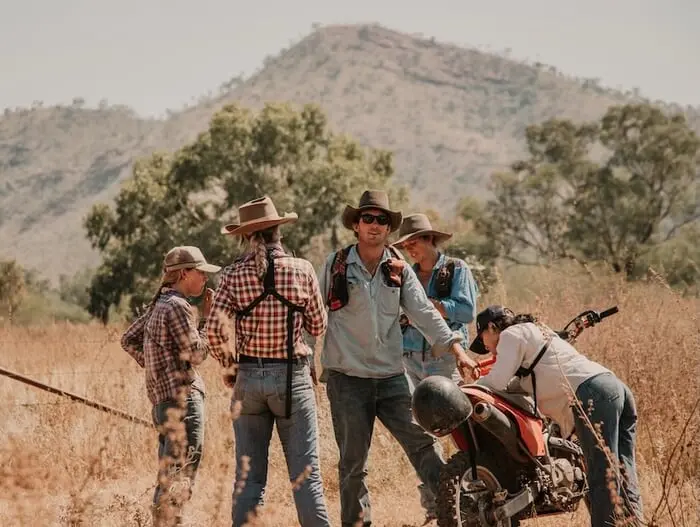
Farm jobs and Agriculture jobs are often used to mean the same thing, but there is a useful difference. Farm jobs usually refer to hands-on work performed on a farm or property. Agriculture jobs are broader and include work across farms, cattle and sheep stations, feedlots, contractors, machinery businesses, livestock transport and Agribusiness.
In practice, there is plenty of overlap. A Farm Hand, Station Hand, Cook or Bore Runner may all work in Agriculture, but their workplaces, duties and required skills can be very different. Understanding the terminology helps job seekers search more effectively and helps employers choose a title that reaches the right candidates.
Farm jobs and Agriculture jobs: the quick answer
Farm jobs are generally roles based on a farm and directly involved in producing crops, livestock or other farm products.
Agriculture jobs include farm jobs, plus the wider range of roles and businesses that support rural production. This can include station work, feedlots, mustering contractors, machinery maintenance, livestock transport, agronomy, rural sales and Agricultural management.
| Point of difference | Farm jobs | Agriculture jobs |
|---|---|---|
| Usual meaning | Work performed on a farm, station or primary-production property | The wider industry, including production and supporting businesses |
| Typical workplaces | Cropping farms, livestock properties, dairy farms, orchards and mixed farms | Farms, stations, feedlots, contractor camps, workshops, saleyards, offices and rural branches |
| Example roles | Farm Hand, Station Hand, Machinery Operator, Fruit Picker, Dairy Hand | All farm roles plus Cook, Bore Runner, Mechanic, Agronomist, Livestock Agent and Agribusiness Manager |
| Search intent | Often practical, entry-level, seasonal or on-property work | Often a broader search covering practical, trade, technical and professional careers |
These are practical distinctions rather than rigid rules. Employers and job boards may categorise the same vacancy differently, so candidates should search both terms and use specific job titles as well.
What are farm jobs?
Farm jobs usually involve the daily work required to operate a primary-production property. The work may focus on livestock, crops, machinery, irrigation, maintenance or a mixture of duties.
Common farm jobs include:
- Farm Hand or General Farm Hand
- Station Hand
- Livestock Hand or Stockperson
- Dairy Farm Hand
- Machinery Operator or Tractor Driver
- Header or Harvester Operator
- Irrigation Hand
- Farm Mechanic
- Farm Overseer or Leading Hand
- Farm Manager
- Fruit Picker, Packer or Harvest Worker
The expression “farm work” is also commonly associated with seasonal and entry-level employment. However, not every farm job is temporary or suited to an inexperienced worker. Operating large machinery, supervising livestock programs, managing staff or maintaining complex equipment may require significant experience, licences and technical ability.
Our Complete Guide to Farm Jobs in Australia covers the types of work available, where to find positions and what employers look for.
Are cattle station jobs considered farm jobs?
Broadly, yes. A cattle or sheep station is an Agricultural property, so station work can sit within a general search for farm jobs. However, Australians usually distinguish a large pastoral property as a station rather than simply calling it a farm.
That matters when searching. An employer in the Northern Territory or northern Western Australia is more likely to advertise for a Station Hand than a Farm Hand. Searching only for “farm jobs” could mean missing relevant station positions.
What are Agriculture jobs?
Agriculture jobs cover the people and businesses involved in producing food, fibre and livestock, as well as many of the services that keep those operations running.
Jobs and Skills Australia groups farming within the Agriculture, Forestry and Fishing industry. Its industry profile includes activities such as growing crops and raising animals and notes that a large share of the workforce is employed in regional Australia.
In everyday job-search language, Agriculture jobs often extend beyond employees physically working in a paddock. They may include:
- Farm, station and feedlot employees
- Agricultural contractors and contract mustering crews
- Agronomists, animal health specialists and technical advisers
- Diesel mechanics and machinery service technicians
- Livestock truck drivers and transport coordinators
- Rural merchandise, machinery and livestock salespeople
- Agribusiness administration, finance, marketing and management roles
- Agricultural technology and data positions
Source: Jobs and Skills Australia: Agriculture, Forestry and Fishing industry profile.
What do real Agriculture jobs look like?
Job titles make the distinction much clearer than generic definitions. RFTTEJOBS.com advertises practical roles across farms, stations, feedlots and rural businesses throughout Australia.
Station Hand
A Station Hand may muster and process cattle, check waters, repair fences, maintain equipment and complete general property work. It is an Agriculture job and may appear in broad farm-job searches, but “Station Hand” is the more accurate Australian title.
Farm Hand
A Farm Hand may work with crops, livestock, irrigation and machinery. Duties depend heavily on whether the property is a cropping, mixed, dairy, horticultural or livestock operation.
Station Cook
A Station Cook prepares meals for staff, visitors and contractors, often with numbers increasing during mustering. The occupation is cooking, but the workplace and employment context make it an important Agriculture job.
Bore Runner
A Bore Runner monitors and maintains bores, pumps, tanks, troughs and water infrastructure across a station. It is a specialised remote Agricultural role that may not appear when someone searches only for conventional farm work.
Machinery Operator
A Machinery Operator may operate tractors, graders, loaders, excavators, air seeders or harvest equipment. The role may be based on one farm or move between properties with an Agricultural contractor.
Agricultural Mechanic
An Agricultural Mechanic keeps tractors, trucks, pumps, generators and other equipment operating. The person may work on a farm or station, in a rural workshop or travel between clients.
Feedlot worker
Feedlot roles can include Pen Riders, Livestock Hands, Feed Truck Operators, Mill Hands and Maintenance staff. These are Agriculture jobs, although the workplace is a feedlot rather than a traditional farm.
Agribusiness professional
An Agronomist, Rural Sales Representative or Agribusiness Manager may spend time on properties but can also work from an office, branch or vehicle. These are Agriculture jobs, but few people would describe them as farm jobs.
The simplest way to think about it: every Farm Hand works in Agriculture, but not everyone working in Agriculture is a Farm Hand or works on a farm.
Job title, occupation and industry are not always the same
A job can be described in several ways:
- Job title: the name used by the employer, such as Station Cook or Bore Runner
- Occupation: the type of work performed, such as cooking, mechanical work or machinery operation
- Industry: the main activity of the employing business, such as beef cattle farming or Agricultural support services
- Workplace: the actual setting, such as a cattle station, cropping farm, feedlot, contractor camp or rural workshop
This is why a Station Cook can be both a hospitality occupation and an Agriculture job. It is also why a diesel mechanic employed by a machinery dealership may support Agriculture without being employed directly by a farm.
Should job seekers search for farm jobs or Agriculture jobs?
Use both, then add the role and location that interest you. Job boards and employers do not all use the same terminology.
Search for farm jobs when you want:
- Hands-on work on a farm or property
- Farm Hand, harvest, cropping, dairy or livestock positions
- Seasonal or entry-level rural work
- Jobs that may include on-property accommodation
Search for Agriculture jobs when you want:
- The widest selection of rural-industry opportunities
- Station, feedlot, contracting or Agribusiness roles
- Trade, technical, scientific, sales or management careers
- Positions supporting farms without necessarily being based on one
Use specific searches for better results
Try combinations such as:
- Station Hand jobs Northern Territory
- Farm Machinery Operator jobs Western Australia
- Station Cook jobs Queensland
- Bore Runner jobs Australia
- Feedlot jobs Darling Downs
- Farm jobs with accommodation
- Entry-level Agriculture jobs
- Agribusiness jobs regional Australia
You can also browse Agriculture jobs across Australia or view all current RFTTEJOBS.com vacancies.
Do farm jobs always require experience?
No. Some employers offer entry-level positions and provide training, particularly where attitude, reliability and a willingness to learn are more important than previous Agricultural experience.
Other jobs require proven ability from the first day. An employer may need someone who can safely operate specific machinery, handle livestock, ride a motorbike or horse, drive a road train, repair equipment or work independently in a remote area.
Read the advertisement carefully and do not assume that “Farm Hand” means unskilled work. Employers should clearly separate essential requirements from skills they are prepared to teach.
Farm jobs, seasonal work and Working Holiday visas
Farm jobs are often associated with backpackers and visa-eligible work, but not every rural vacancy accepts Working Holiday visa holders. Many station and farm employers seek permanent employees, experienced operators or applicants with unrestricted Australian work rights.
Visa holders should confirm:
- Whether the employer accepts their visa type
- Whether the work and location meet any applicable visa requirements
- The proposed employment period and start date
- Required experience, licences and transport
- Pay, hours, accommodation and deductions
Visa settings and specified-work rules can change. Check current requirements through the Department of Home Affairs rather than relying on the wording “farm job” alone.
How should employers describe a farm or Agriculture job?
Use the title candidates are most likely to recognise, then add useful detail about the workplace or specialisation.
Clear examples include:
- Farm Hand | Mixed Cropping & Livestock | NSW
- Station Hand | Cattle Station | NT
- Machinery Operator | Seeding & Harvest | WA
- Station Cook | Remote Cattle Property | QLD
- Bore Runner | Large Pastoral Operation | SA
- Pen Rider | Feedlot | Darling Downs
- Diesel Mechanic | Farm & Station Equipment | Katherine
Avoid relying on a broad title such as “Farm Worker” if the position has a recognised industry name. Accurate titles help suitable candidates find the vacancy and understand the work before applying.
The body of the ad should explain:
- The property or business and its location
- The main duties and a realistic working day
- Essential experience, licences and tickets
- Salary or hourly rate, roster and employment type
- Accommodation, meals, internet and mobile coverage
- Whether the role suits couples, families or visa holders
- The employer’s policy on dogs and horses
- Training, progression and other genuine benefits
Employers can read our complete guide to Ag Recruitment in Australia or compare Agricultural job advertising options.
Frequently asked questions
What is the difference between farm jobs and Agriculture jobs?
Farm jobs usually refer to work performed on a farm or primary-production property. Agriculture jobs are broader and include farm jobs as well as station, feedlot, contracting, machinery, transport, technical, sales and Agribusiness roles.
Is a Station Hand a farm job?
Yes, in the broad sense that it is hands-on Agricultural work on a primary-production property. However, Station Hand is the more accurate and commonly used title for work on many Australian cattle and sheep stations.
Is a Station Cook an Agriculture job?
Yes. A Station Cook performs a cooking role within an Agricultural workplace and is essential to many remote station teams, particularly when staff numbers increase during mustering.
What does a Bore Runner do?
A Bore Runner checks, operates and maintains a station’s water infrastructure, which can include bores, pumps, tanks, troughs, pipelines and related equipment across large distances.
Are all farm jobs seasonal?
No. Agriculture includes seasonal, casual and contract work, but many Farm Hand, Station Hand, Mechanic, Cook, Overseer and Manager positions are permanent or ongoing.
Can beginners apply for farm jobs?
Yes, when an employer identifies the position as entry level or is willing to train. Applicants should be honest about their experience and demonstrate reliability, safety awareness, common sense and a genuine willingness to learn.
Where can I find farm jobs and Agriculture jobs in Australia?
Browse current rural and Agricultural jobs on RFTTEJOBS.com, use the dedicated job categories and subscribe to alerts for roles matching your interests.
Find your next job in Agriculture
Explore current opportunities across Australian farms, stations, feedlots, contractors and rural businesses.
Browse Current Jobs