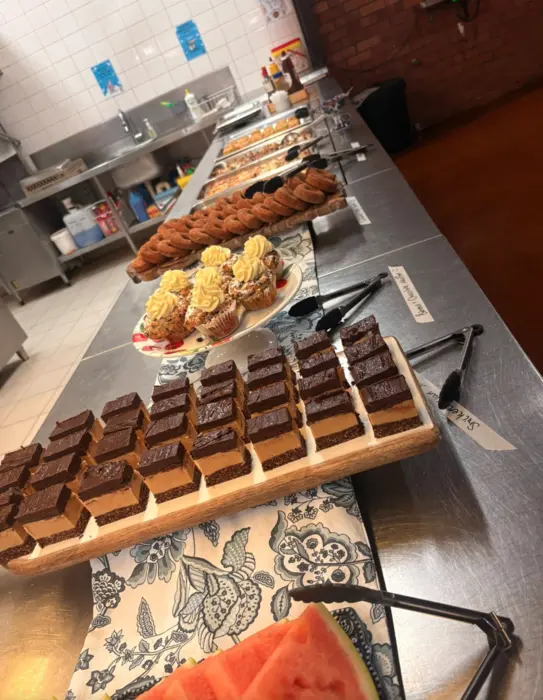
There’s something sacred about smoko on a cattle station. Whether the crew is out in the stock camp, fencing, working cattle in the yards or back at the homestead, smoko is the pause that keeps the day moving.
It is not just a tea break. It is a chance to refuel, catch your breath, come up with a nickname for a mate, have a yarn and work out what still needs doing before knock-off - and yes smoko can still include a 'rolly' or 'tailor-made' cigarette! Sometimes smoko is delivered to the paddock with tea and coffee in enamel mugs. Other times it is waiting in the station kitchen, with enough homemade baking to feed a small army.
We asked the RFTTE community on Facebook to share the best smoko they had ever eaten. The memories came pouring in, from pufftaloons dripping with golden syrup to corned beef sandwiches under a coolibah tree.
Smoko quick facts
- Smoko is the traditional morning or afternoon break on many Australian cattle stations.
- It may include sandwiches, cakes, slices, scones, sausage rolls, damper or whatever the cook has prepared.
- On busy days, smoko is often packed and delivered to stock camps, yards or fencing crews.
- A good station cook plays a major role in crew morale, especially during long musters and branding runs.
Meet Ebony, the NT cook behind That Station Cook
One station cook putting her own stamp on outback food is Ebony, the woman behind That Station Cook on Facebook.
Ebony works on a cattle station in the Northern Territory and has built a following of more than 118,000 people by sharing the food, creativity and hard work that go into feeding a station crew. For privacy reasons, she keeps the name and location of the station to herself.
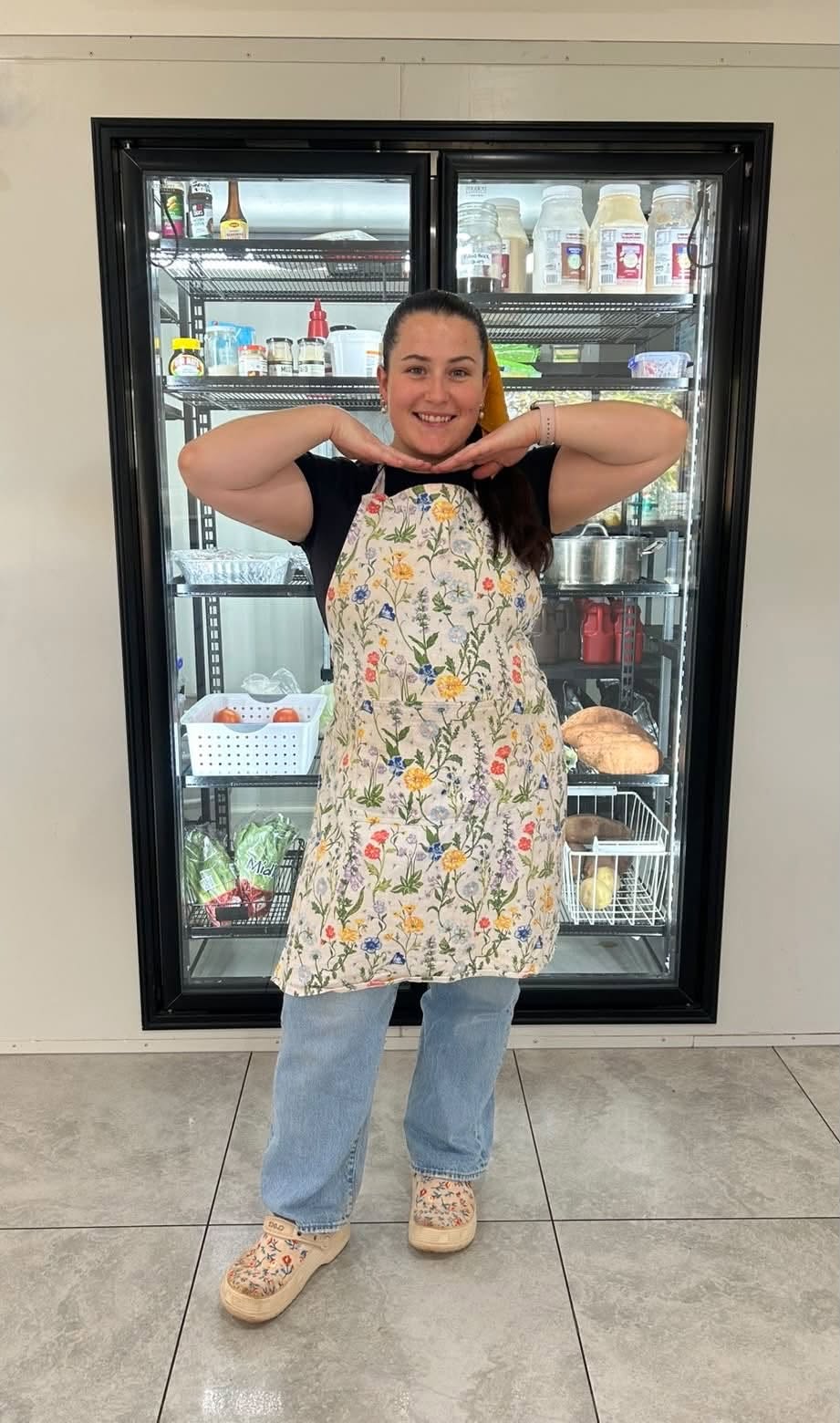
Ebony, the NT cattle station cook behind the popular That Station Cook Facebook page.
Her cooking story began well before station life. A fussy eater when she was younger, Ebony started cooking for herself in her early teens. As her palate developed, so did her love of experimenting with different flavours.
How Ebony found station life
In 2020, Ebony’s partner told her he wanted to work on a cattle station. She knew nothing about the industry at the time, but decided, “Bugger it, I’ll give it a go.”
In 2021, they posted a job ad in several cattle station employment groups on Facebook. After receiving an overwhelming response and speaking with a number of stations, they accepted work on a family-run property near the Queensland and Northern Territory border.
Ebony has now worked on three cattle stations across two states.
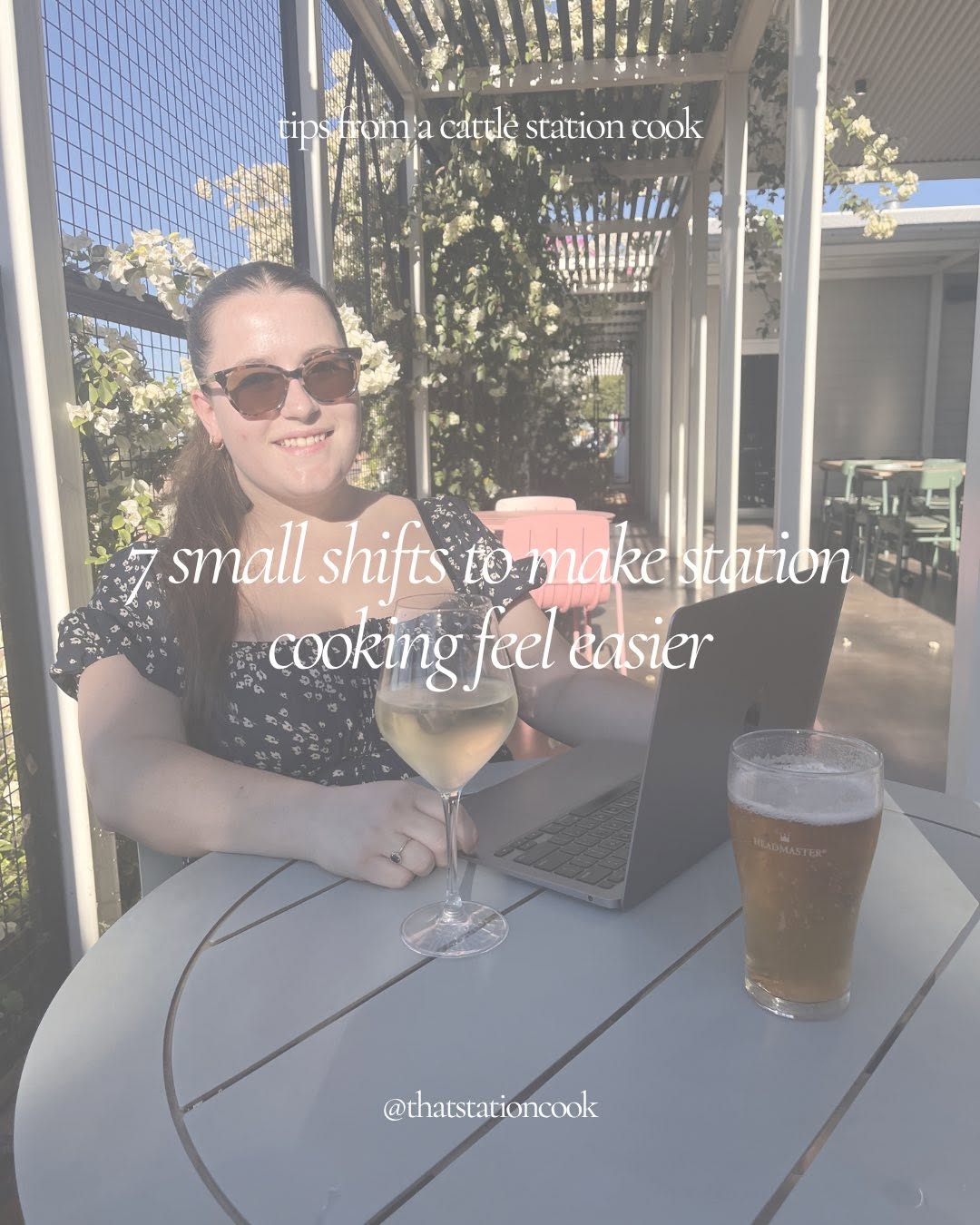
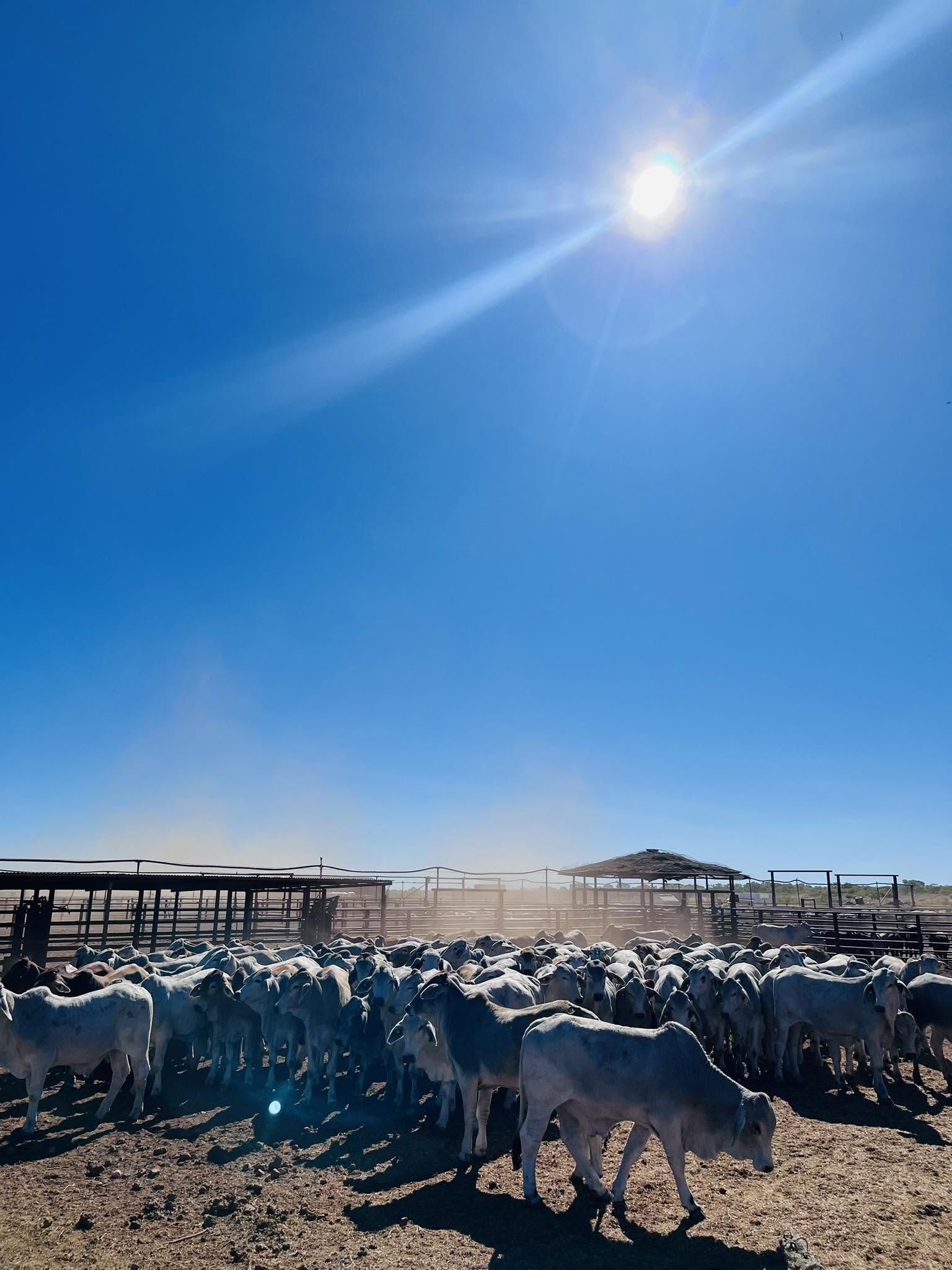
Life behind That Station Cook, from sharing practical kitchen tips to feeding a crew on a working NT cattle station.
What is cooking in Ebony’s kitchen?
Ebony loves baking, particularly sourdough loaves, scrolls, focaccia and pizzas. As she puts it, “Anything that I need to knead is right up my alley. I was definitely a baker in a previous life!”
Stir-fries have been a massive favourite with her station crew this year, while crumbed steak remains a perennial winner.
Ebony, That Station Cook
When she is cooking for herself, her pick is spaghetti bolognese with freshly grated parmesan and a side of rosemary focaccia. She draws inspiration from Francesco Mattana, Turkuaz Kitchen and Cassie Yeung.
Ebony’s advice for aspiring station cooks
It is a simple bit of advice that sums up Ebony’s own journey. She took a chance on an industry she knew nothing about and found a life, a career and an online community that now follows her station kitchen adventures from around Australia.
What is smoko on a cattle station?
Smoko is a short break during the working day, usually in the morning and sometimes again in the afternoon (or evening!). On a cattle station, it can be as simple as a quart pot of tea and last night's cold chop from a saddlebag, or as impressive as fresh bread, cream buns, sausage rolls, sandwiches, cakes and slices laid out in the kitchen.
Station kitchens have changed over the years. Some are now fitted with large cooktops, stainless-steel benches and glass-door fridges packed with food for the crew. Others still rely on old ovens, camp fires and whatever ingredients happen to be available.
No matter how flash or basic the kitchen is, the station cook remains one of the most important people on the place. A good cook does more than feed workers. They help create the feeling of home that people remember long after they leave.
BG Thompson remembered eating that smoko under a coolibah tree while the crew worked 2,000 head of cattle in the yards. The cook later became his wife of 17 years and the mother of their three children.
As BG put it, he is also now “35 to 40 kilograms fatter”. That is one smoko that certainly changed a life.
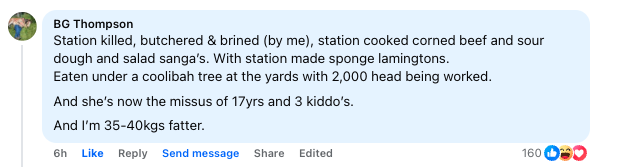
A proper station smoko, with plenty to keep a hungry crew going.
The legends behind the ovens
Some names came up repeatedly in the RFTTE community discussion.
Barb Strickland received several nominations as “the best station cook ever”. Elizabeth Anne Kelly was remembered for everything from jelly slice to beef stroganoff. Kaylene Bambrick at Tobermorey Station made marshmallow slice and “cute little three-layered sandwiches” that people still talk about years later.
Wendy Cox at Tipperary Station
Wendy Cox, also known through Wendy’s Cooking Adventures, has cooked up some cracking feeds for the crew at Tipperary Station in the Northern Territory.
Wendy plans ahead, lines up ingredients and trays, and bakes enough treats to help carry the crew through the week. Her homemade bread rolls are the sort of smoko people remember.
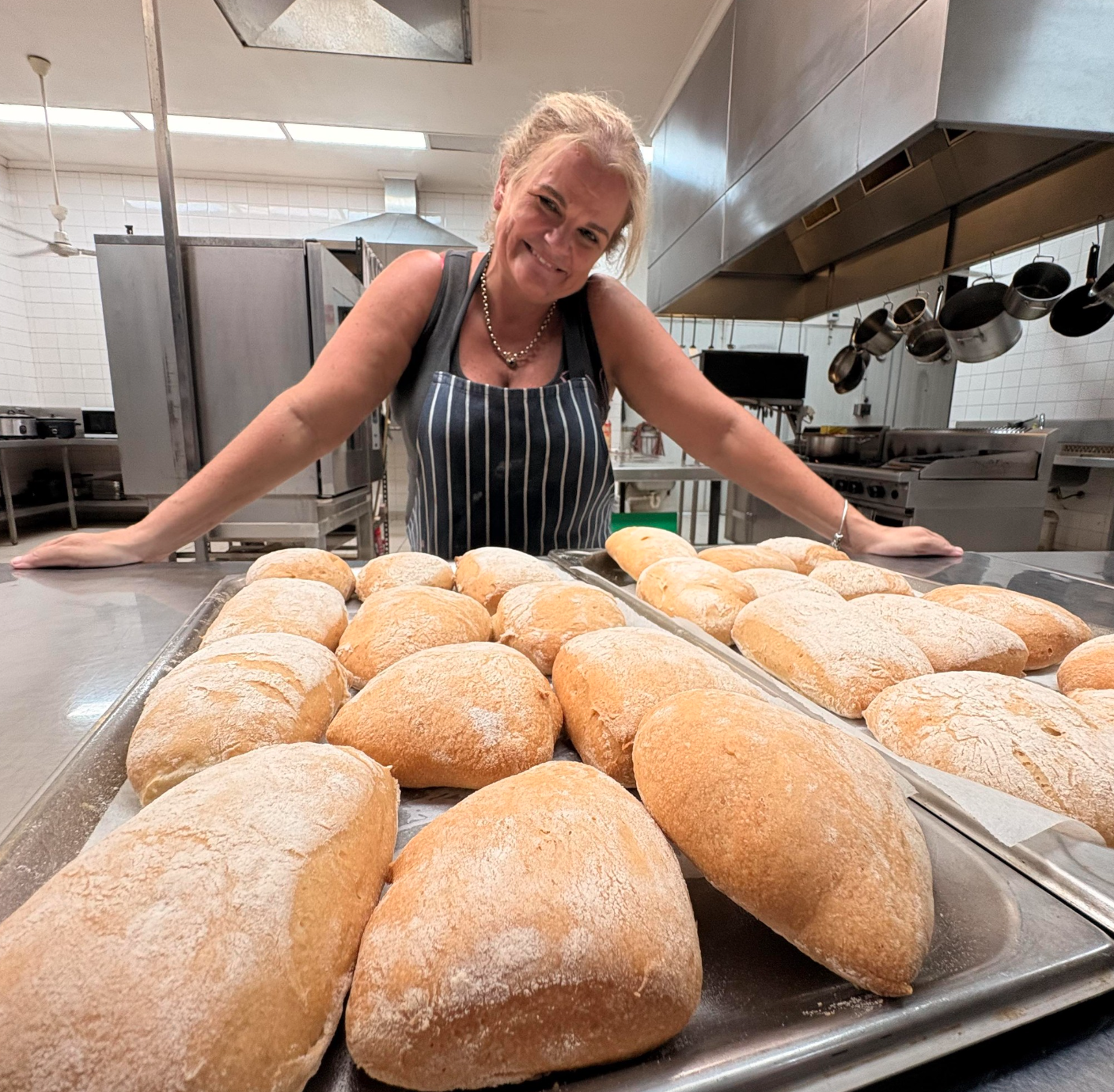
Wendy Cox with homemade bread rolls prepared for the crew at Tipperary Station, NT.
Mac at Springvale Station
At Springvale Station near Halls Creek in 1989, an old stockman-turned-cook named Mac became famous for bread served hot and fresh with butter and honey.
He also made steak sandwiches cooked just right and brownies that still make mouths water decades later.
Cooky at Carlton Hill
One of my own favourites was the vanilla slice, otherwise known as a “snot block”, made by Michael Byers, or Cooky, for the Carlton Hill crew in the early 1990s.
Cooky’s smoko was fit for a king. From smoked spare ribs to chocolate cake, he knew how to keep a crew happy.
Poppy Spurling at Nerrima Station
On several trips taking horses to cattle stations with Gus Rose in his road train, we stayed at Nerrima Station in the West Kimberley. We were always warmly welcomed by managers Chris and Bec Morrow and their daughter Georgina.
After being extremely well fed by Nerrima cook Poppy Spurling, Gus and I would usually end up a few “kegs” heavier. Poppy kept an exceptionally organised kitchen, with smoko on hand around the clock.
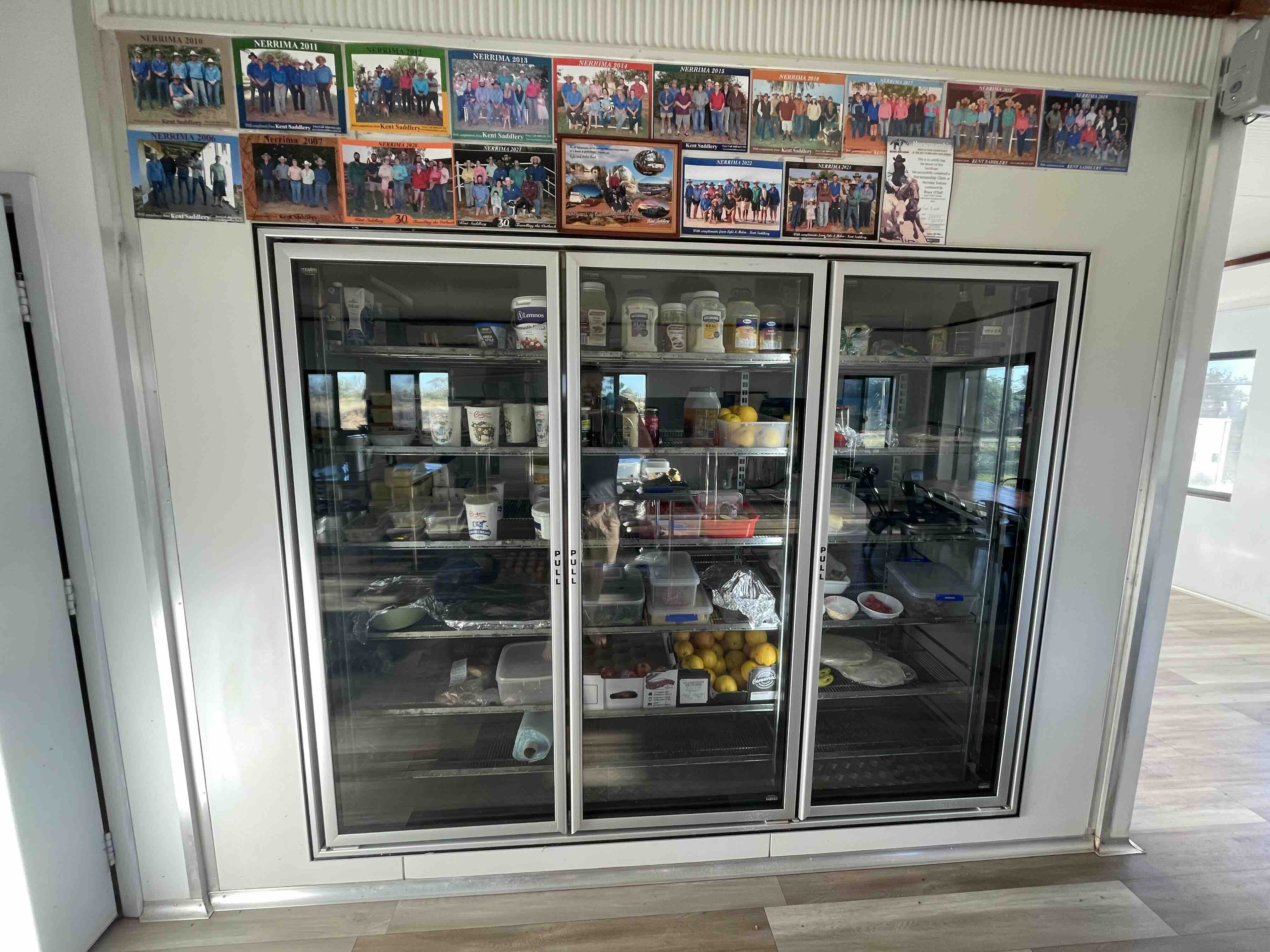
Poppy Spurling’s well-stocked kitchen fridge at Nerrima Station in the West Kimberley.
Karen Smith and Pie in the Sky
Karen Smith has cooked on stations since 2019, including Auvergne, Newry, Tipperary, Camfield Station and Newcastle Waters.
Karen is well known for her “Pie in the Sky”, delivered to cattle station pilots, as well as the generous smoko she prepares for the ground crew.
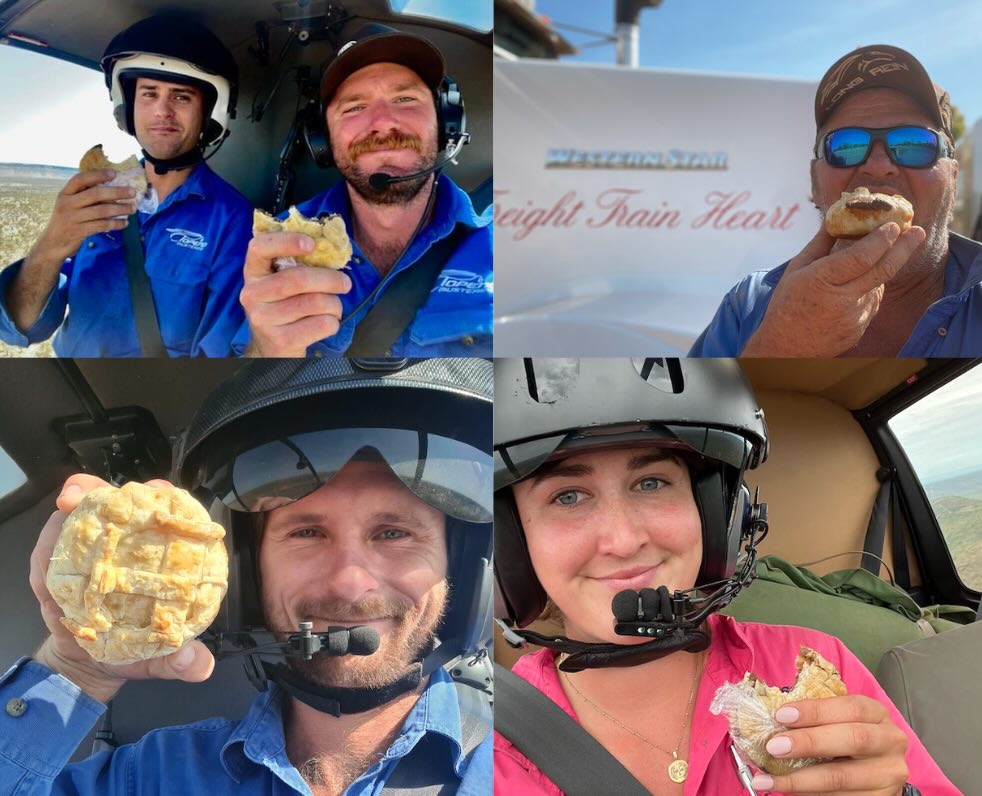
Karen Smith’s famous “Pie in the Sky” for a cattle station pilot.
The station cook who nearly gave up
Nicky Abrahams regularly shares photos of her incredible smoko and station meals with the RFTTE Facebook community. The crew at Ethel Creek Station near Newman in Western Australia’s Pilbara are a lucky mob.
But Nicky’s station cooking journey nearly ended before it properly began.
After living in Tasmania for 18 years, Nicky, her husband and their two miniature poodles sold up and left on 4 June 2025 to travel around Australia and pick up work along the way.
Her first remote cooking role was during the 2025 harvest near Esperance. It was not a good experience, and by Christmas she was ready to walk away from station life altogether.
What Nicky had forgotten was that she had already applied for a cook’s role at Ethel Creek Station. A phone call came a few weeks later, and something about the conversation felt right. She arrived at Ethel Creek on 12 January 2026.
She is now the oldest member of a young crew and has been affectionately nicknamed “Momma Nick”.
The cooking days are long, but Nicky says they are incredibly rewarding. She also enjoys helping feed the poddy calves, whose pens sit just outside her kitchen window beside her cottage.
With experience managing cafés, working in restaurants and running commercial kitchens in the United Kingdom and Tasmania, Nicky had the hospitality background for the job. She simply needed to find the right station.
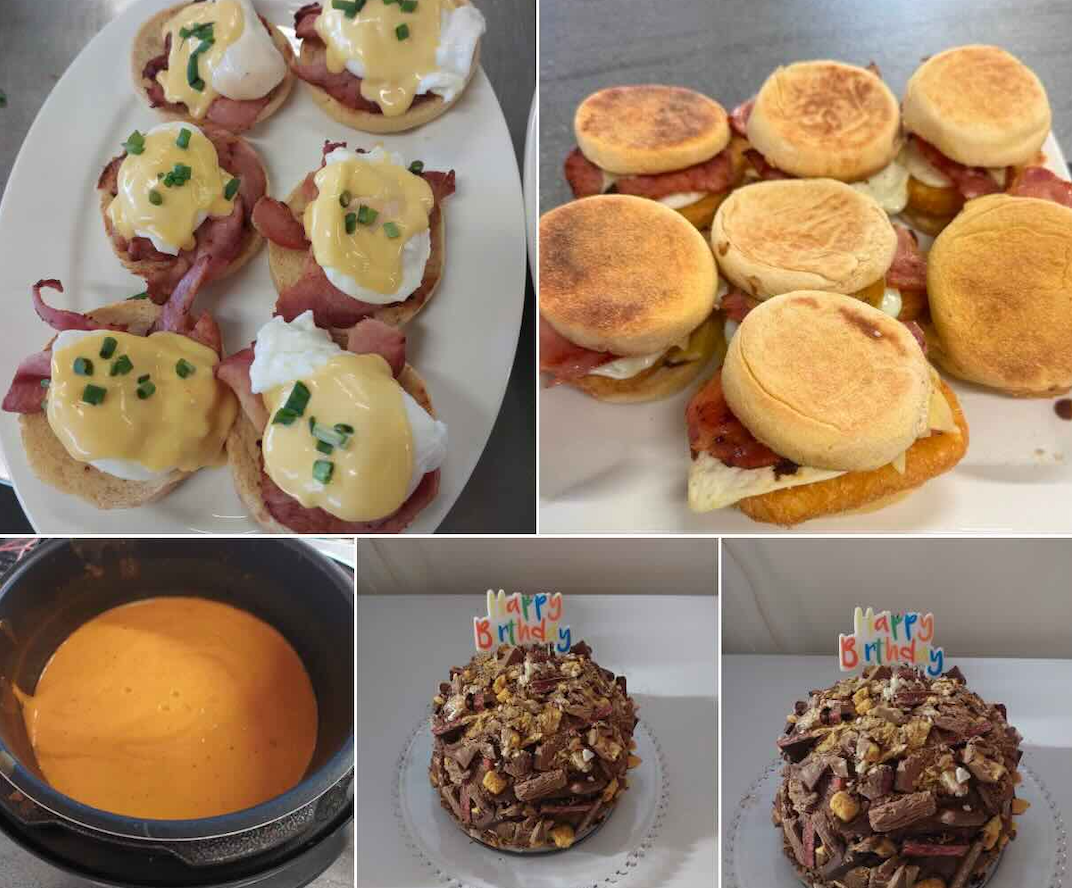
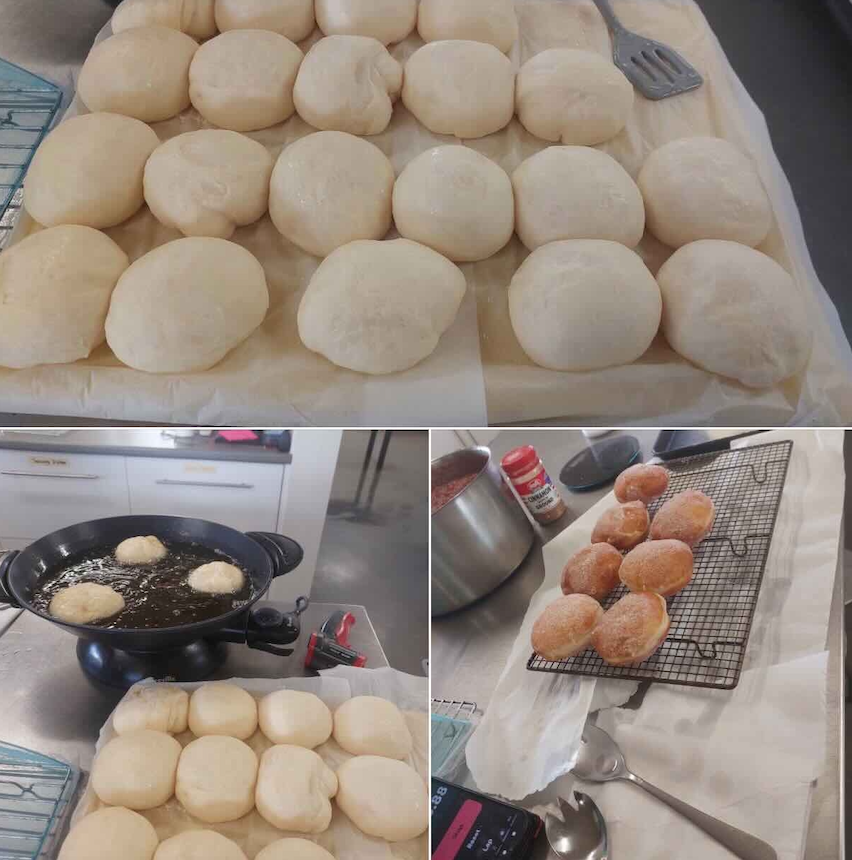
Fresh pufftaloons and homemade treats prepared by Nicky Abrahams for the crew at Ethel Creek Station.
From Eggs Benedict to birthday cakes, Nicky keeps the Ethel Creek crew very well fed.
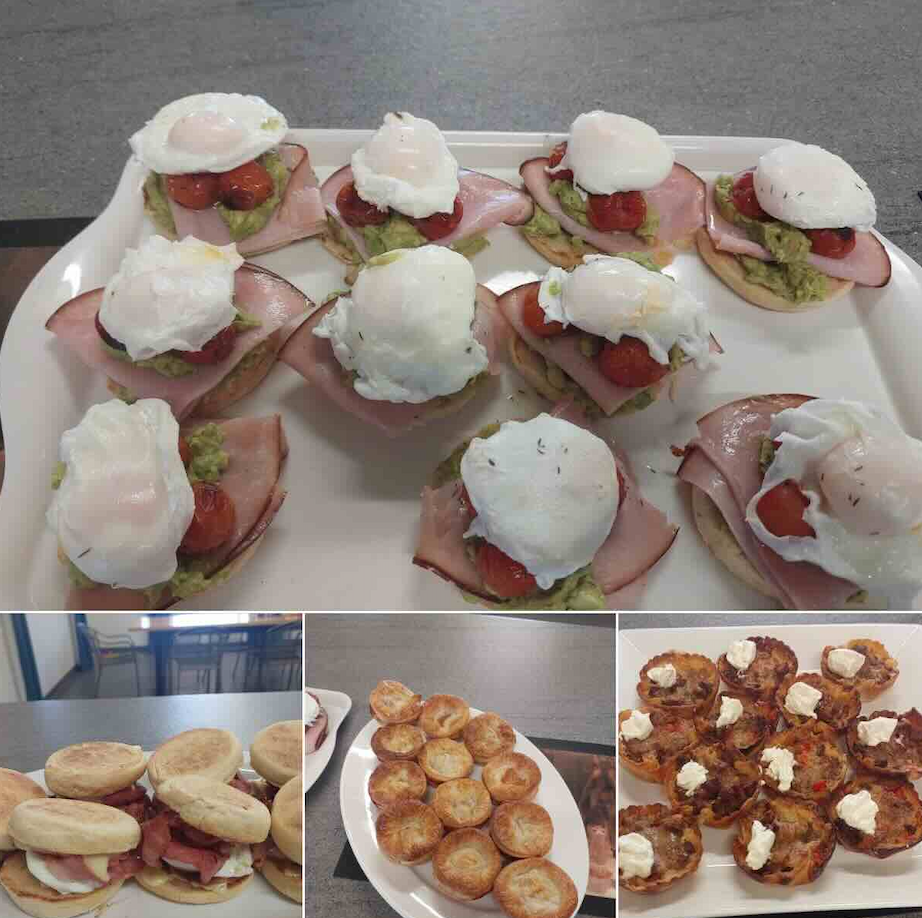
A typical homemade smoko prepared for the Ethel Creek crew.

Station cook Nicky Abrahams at Ethel Creek Station in the Pilbara, Western Australia.
Top 10 station smoko favourites
These were among the foods mentioned most often by RFTTE members:
- Pufftaloons with golden syrup or maple syrup
- Vanilla slice, better known in some camps as a snot block
- Corned beef fritters
- Sausage rolls
- Fresh bread with butter and honey
- Sponge cake with cream and jam
- Damper with jam, syrup or marmalade
- Brownies and chocolate cake
- Johnny cakes cooked on the coals
- Sandwiches packed for the yards or stock camp
I can clearly remember being assigned as stock camp cook for a day at Carlton Hill. Pufftaloons became my answer to almost every meal. Needless to say, I was not invited back for another cooking shift.
The simple pleasures
Not every memorable smoko was elaborate. Some of the best were beautifully simple:
- Cold chops carried in a saddlebag
- Cheese and an onion, which was apparently meant to keep the blood cool on hot days
- Beef jerky wrapped in old newspaper
- Damper and billy tea
- Johnny cakes cooked on the coals with golden syrup
- A quart pot of tea and ten minutes of peace
- Fillet wrapped in belly fat and cooked on a shovel over the coals
Matt Mitchell remembered cheese and onion from the saddlebag while working at Moola Bulla in Western Australia, apparently the onion kept the blood cool on hot days!
Another old-time ringer summed up his usual break this way: “A drink of water and a look around was my go-to smoko. Champion Ruby or Log Cabin would see me through until lunch.”
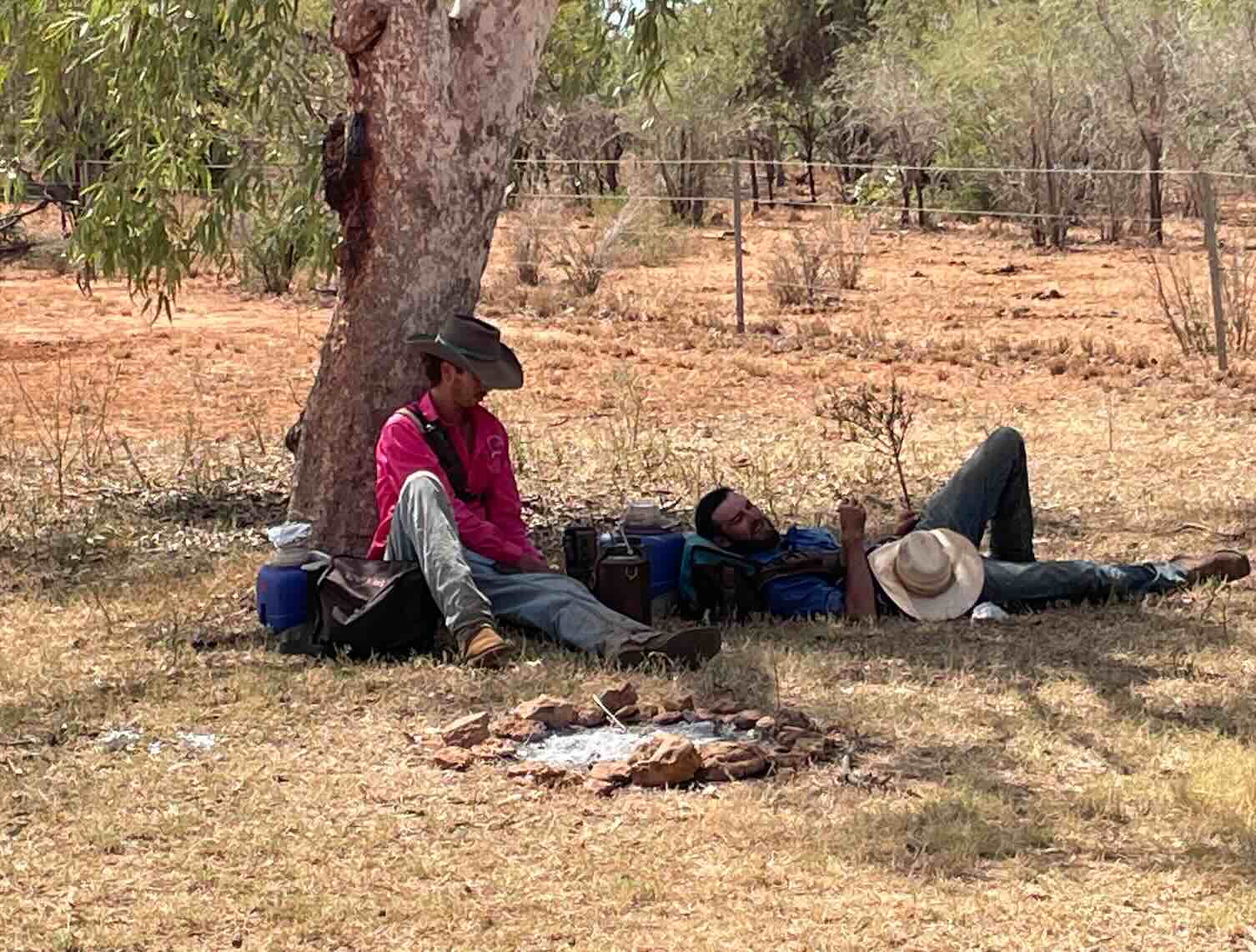
Smoko at Nerrima Station in the West Kimberley, 2024.
Resourceful station cooking at its best
One thing that stood out in the stories was the resourcefulness of station cooks.
Jackie Backash at Mallapunyah once sent green bananas with cooking instructions when workers were flooded in and running short of food.
At Cape York, a young cook was handed a wheelbarrow full of fresh catfish by the gardener. She turned it into battered catfish with battered banana, sweet chilli sauce, garlic naan and bush lemons.
Remote cooks cannot always rely on a fully stocked pantry or a supermarket down the road. They need to plan ahead, make good use of leftovers and work with whatever is available.
Roast meat may become sandwiches or fritters. Leftover casseroles can be turned into pies, pasta, shepherd’s pie or curry. Slices, scrolls and sandwiches can be batch-cooked and frozen so the smoko table stays stocked during the busiest weeks.
What makes good station smoko?
Good smoko is filling, portable and easy to prepare ahead of time. It usually includes a mix of savoury and sweet food, can survive a trip to the paddock and gives the crew enough energy to get through the next part of the day.
Why smoko matters
As Tony Large pointed out, station smoko is usually made from recipes that have stood the test of time, with cooks able to cater for large groups who turn up unannounced and without much fuss.
That is the mark of a great station cook: making something special happen regardless of the conditions, numbers or notice.
Long after people forget how many cattle they worked or how many kilometres they rode, they remember the smell of bread coming from the kitchen, the billy boiling beside the yards and the people they shared smoko with... or even that cold water tap outside the kitchen after a morning in the yards!
That is what makes station life special.
Frequently asked questions about station smoko
What does smoko mean in Australia?
Smoko is an informal Australian term for a short break during the working day. Although the word originally referred to a smoking break, it is now commonly used for morning or afternoon tea, whether anyone smokes or not - and a 'rolly' or 'tailor made' smoke are still usually had!
What is smoko on a cattle station?
On a cattle station, smoko is a break for the crew to eat, drink and recharge. It may take place at the homestead, in the yards, beside a bore or out in the stock camp.
What food is served at station smoko?
Common station smoko foods include sandwiches, sausage rolls, scones, cakes, slices, biscuits, pufftaloons, corned beef fritters, damper, fresh bread and leftovers turned into portable meals.
Who prepares smoko on a cattle station?
The station cook usually prepares smoko, although stock camp cooks, managers, ringers and other crew members may also lend a hand depending on the size and location of the station.
How often do station crews have smoko?
This varies between stations and depends on the work being done. Many crews stop for morning smoko, while some also have an afternoon break during longer working days.
Why is smoko important on a station?
Smoko gives workers a chance to rest, eat, hydrate and talk through the day’s work. It also helps build crew morale and creates many of the memories people associate with station life.
What is a pufftaloon?
A pufftaloon is a simple piece of fried dough commonly served warm with golden syrup, honey, jam or butter. It has long been a favourite on cattle stations and in bush camps.
Looking for a station cook job?
Browse current cook positions on cattle stations, farms and rural properties across Australia.
View the latest cook jobsLooking for your next great station cook?
A good station cook is worth their weight in gold, or perhaps pufftaloons. They can be the difference between a crew that is simply getting through the season and one that genuinely enjoys being there.
Station managers and owners: post your cook position with RFTTEJOBS.com and reach people looking for work across Australia’s cattle stations, farms, feedlots and rural industries.
What is your best smoko memory?
What is the best smoko you have eaten on a station? Who was the cook who made life that little bit better?
Share your memory in the RFTTE Facebook discussion or email hello@rfttejobs.com.